NEED FOR SPEED

DREAM WHEELS: Plan for your ideal car
Image: Ian Landsberg Independent Newspapers
IF YOU can access finance for a vehicle, consider yourself lucky – and make sure to do your homework on the best loan options.
Interest rates are the most significant factor determining the overall cost of a loan.
Make sure to shop around for the best rate, and don’t forget to factor in fees when calculating the total cost of any loan.
Your repayment period matters.
A longer repayment period will reduce the size of your monthly payments, but it will also result in you incurring more interest.
It is always better to pay off any loan as quickly as possible.
Putting down a deposit will reduce the cost of your loan, and will bring down both your interest rate and your monthly instalments.
Generally, the bigger the deposit, the shorter your repayment term will be and the lower your repayment amount will be.
If you can’t pay for your chosen vehicle in full, you will have to finance your big purchase. There are some main finance options available, but your access to these options depends on a few factors.
Those include the age of the vehicle, whether you are buying from a dealer or a private seller, whether you have a mortgage and your credit score.
A home loan is often considered the best way to finance a vehicle.
The interest rate on your home loan is lower than that of most car loans, and by simply restructuring this existing loan you avoid all the work involved with applying for a new loan.
However, the term of a loan plays a big part in determining the overall cost of a loan.
If you pay back the amount borrowed for a car over 10 years (120 months), it will cost many times more than what it would have cost if you had taken out a 36-month car loan with an interest rate even five percent higher.
The bottom line is that if you use your home loan to pay for a vehicle purchase, you should aim to repay the loan within 48 months.
For buyers who don’t have a home loan, there are a few other options. The best method for those buying from a dealer will usually be a vehicle loan. This specialised kind of loan accepts the vehicle as collateral.
Crucially, it also means that if you default on payments, the vehicle can be seized to recover the loan.
If you decide to apply for a vehicle loan, expect the following features and conditions:
−Typically only given for cars younger than sixty months
−Usually fixed at 36, 48 or 60 months
−Can be structured to include a balloon payment
−Can involve trade-in’s to reduce the cost
−Can involve a deposit, again reducing the cost
Mense who decide to buy an older car, or one from a private seller, the only option is to get a personal loan.
Because these loans are unsecured, lenders usually charge higher interest rates to compensate for the risk, but unlike a vehicle loan purchase, you own the vehicle as soon as you pay for it.
To reduce the cost of personal loan, there are two things you can do:
−Improve your credit score which would earn you a better interest rate, and make the loan term as short as possible.
−If possible, avoid using a personal loan to pay for a used vehicle entirely.
−When financing a new car, you might also have the option of a balloon repayment.
−Make sure that you know exactly what this means for you, and your monthly repayments.
According to Standard Bank, unlike regular vehicle financing, a balloon payment is a type of car loan where you pay lower monthly instalments for a period, and then at the end of that term, you owe a large lump sum which you agree to pay back.
This means the bank still owns your vehicle until the balloon payment is paid back in full.
A balloon payment can work for you if:
−You have the means, or you’ve budgeted the money you saved on the monthly repayments.
−You’re planning to put the money you save on your car payment towards the outstanding amount owed or use it to pay off other debt and free up cash flow, or you are guaranteed a bonus or tax refund that you could earmark for the balloon payment.
Remember, if you don’t pay your final balloon payment, you cannot resell your vehicle (because technically the vehicle still belongs to the bank) and it can still be repossessed.
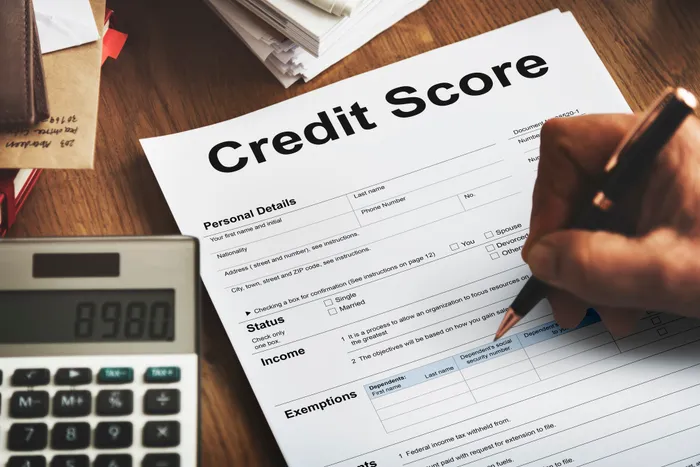
REV IT UP: A person’s credit score is determined by their credit history and their ability to pay back loans on time
Image: Rawpixel/Freepik