GIRL TOT GREW PENIS
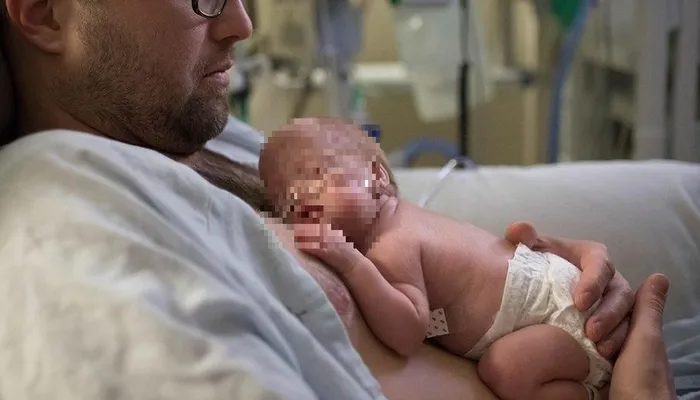
TRANSFER: Image for illustrative purposes
Image: Pexels
IN A bizarre and startling medical case newborn baby girl started growing a penis, according reports in Sweden.
The meisiekind started to display “male-like genitalia” after spending time on her dad’s kaalbors.
He had been applying testosterone gel on his chest to treat a hormone problem.
Little did he know that the powerful hormones were transferring directly from him to her skin.
In this particular case, the infant's clitoris enlarged and began to fuse her labia, prompting alarmed parents to seek medical help.
Blood tests confirmed high testosterone levels, leading doctors to identify the source as the father’s hormonal treatment.
After the dad stopped his testosterone treatment, the girl’s anatomy began to revert to typical female characteristics.
This shocking incident, revealed by pediatric endocrinologist Professor Jovanna Dahlgren in an interview with Göteborgs-Posten, is not isolated.
Dahlgren reported having encountered at least six children subjected to similar conditions due to inadvertent hormone transfer. Among those cases was that of a 10-year-old boy who developed breasts after contact with his mother’s estrogen cream.
The rise in testosterone replacement therapy (TRT) usage in recent years has made headlines, with American prescriptions surging from 7.3 million in 2019 to more than 11 million by 2024, according to CBS News.
Social media platforms like TikTok now feature numerous users sharing their experiences with the treatment, promoted as an antidote for "manopause," an age-related decline in testosterone levels.
While TRT can enhance energy and libido, it carries side effects such as acne, mood swings, and potential fertility issues.
What was intended as a bonding practice known as "kangaroo care" turned into a medical crisis for the newborn.
Though this incident occurred several years ago, it serves as an ongoing warning about the complications that can arise from hormone exposure in vulnerable individuals.
Despite no charges being filed and no lasting harm reported, medical professionals are calling for increased awareness regarding the use of hormone treatments, particularly in environments where children are present and developing.