ALL IN THE MIND
Young people are opening up about mental health issues and seeking help
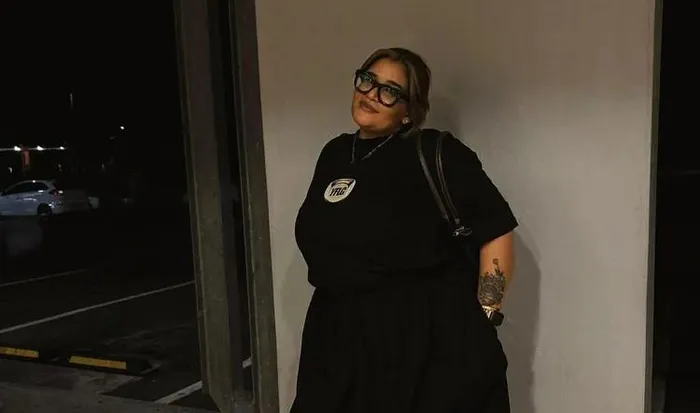
COURAGEOUS: Kirsten Floris
Image: Supplied
AS SOUTH Africans observe Mental Health Awareness Month this October, more and more young people are becoming more mindful of their issues.
While mental health is often stigmatised as disorders and an inability to function in society, it can be more mundane than that.
In fact, most issues arise from everyday challenges. And if untreated, these could lead to depression, anxiety and more serious personality disorders.
While some might feel ashamed to speak out or even admit an issue to themselves, Cassey Chambers, the Operations Director for the South African Depression and Anxiety Group (SADAG) says “it’s okay to not be okay but you don’t have to go through it alone”.
In South Africa one in three people will or do have a mental illness at some point in their lifetime. Furthermore, while women are diagnosed with depression and anxiety more often than men, men are four times more likely to die by suicide than women.
She explained “SADAG’s message for Mental Health Awareness Month is that “It’s OK to not be OK but you don’t have to go through it alone.
“Only 1 in 10 people with a mental Illness have access to mental healthcare or treatment, which means 9 out of 10 people with a mental Illness do not have access to mental health care.
“Unfortunately, many South Africans still don’t know where to go for help, or they assume that mental health care is only available through private doctors or expensive clinics.
"We are also seeing an increase in youth and adolescent mental health concerns.
"Mental illness impacts the way we think, we feel, we behave and how we respond to the things around us - it's a whole body illness that has emotional and physical symptoms.”
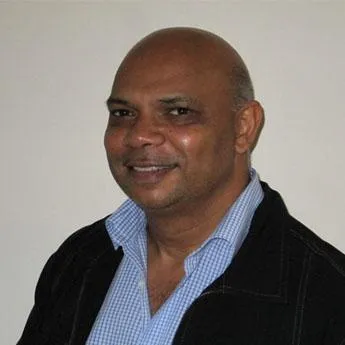
CONCERN: Professor Trevor Moodley
Image: Supplied
She added that South Africans are experiencing a wide range of mental health challenges, with depression and anxiety being among the most common.
Such issues can be triggered by relationship and family challenges and substance abuse.
Some of the warning signs to look out for include drastic changes in mood, sleep, or appetite, such as sleeping too much and always feeling tired, or battling to sleep each night and feeling exhausted.
People withdraw from friends, family, work, or usual activities, especially not doing things that you used to enjoy because they don't bring you joy anymore.
Difficulty concentrating or making decisions, because a mental illness affects our brains which is a major organ in our body, it can make it difficult to concentrate, to multi-task or even make decisions - so it impacts our cognition.
She added: "We have seen a growing increase over the years, especially since the Covid-19 pandemic. Before the pandemic we were receiving 600 calls per day, and from the first day of lockdown our call volumes doubled overnight.
"Since then we've seen a growing increase. Currently, we receive 3 000 calls per day.”
School learners and university students are especially vulnerable, as the pressure to excel is constant.
Professor Trevor Moodley from the Educational Psychology Department at the University of the Western Cape said that there is a growing trend in mental health challenges both at school and University level.
He added: "Children are put under a lot of strain to excel academically. Besides the stressors they might feel in academic performance, we have a lot of social emotional issues such as high unemployment and violence, including abuse.
“I think it has escalated more with addiction to social media. Children are exposed to social communication 24/7.
“There is so much of a focus on image and because of that they are always comparing themselves to how other people live so there is this issue of not feeling good about themselves."
He added that on school level little is done to combat mental health as there is a focus on academic performance.
"The problem is, are there sufficient resources available when people want to access them?
“We might have good policies in place but the trap we fall into is to think people always need specialist support and in most instances that is not possible because the services are too expensive. I think one needs to start looking at community resources."
Kirsten Floris, 28, from Parow said that she was first diagnosed with depression at the tender age of nine years old after battling severe social anxiety.
At the age of 23, she was officially diagnosed with borderline personality disorder, anxiety, depression and ADHD.
Now she helps others overcome their own demons.
She said: “A lot of people have opened up to mental illness but a lot of people have seen that mental illness is something you blame on yourself.
“I educate people on the topic by saying don't use mental illness to abuse other people but also don't shy away from it."
Her advice to anyone struggling with mental health is to acknowledge the problem and work on the solution.
SOME HELPFUL CONTACTS
24-HOUR TOLL-FREE EMERGENCY HELPLINES
Suicide Crisis Helpline
0800 567 567
Department of Social Development Substance Abuse Helpline
0800 12 13 14
SMS 32312
Cipla Mental Health Helpline
0800 456 789
SMS 31393
NPOwer SA Helpline
0800 515 515
SMS 43010
Healthcare Workers Care Network Helpline
0800 21 21 21
SMS 43001
UFS #Fair Kitchens Chefs Helpline
0800 006 333
8AM-8PM TOLL-FREE HELPLINES
Dr Reddy’s Mental Health Helpline
0800 21 22 23
Adcock Ingram Depression & Anxiety Helpline
0800 70 80 90
ADHD Helpline
0800 55 44 33
Pharma Dynamics Police & Trauma Helpline
0800 20 50 26
8AM-8PM SADAG OFFICE NUMBER
SADAG
011 234 4837