SHED YOUR DEBT WEIGHT

BURDENED: Women and young people in particular carry a lot of financial stress
Image: Pexes
South Africans are less stressed about money, but pressures persist
On Tuesday, 22 July 2025 – DebtBusters made public their fourth annual Money-Stress Tracker, which surveyed over 27 000 respondents during May and June.
This makes it one of the largest online surveys about how financial stress impacts South Africans’ lives.
To me, the biggest and most surprising revelation of the survey showed how South Africans are less worried about money than they have been for the past two years.
Despite this, money stress remains a significant issue for many people.
The 2025 survey found that 70 percent of respondents experienced money stress. This is down from 78 percent in 2023 and 75 percent in 2024.
Although the extent of financial anxiety is declining, the impact on daily life remains substantial.
Of those experiencing financial stress, 91 percent felt it affected their home life, 73 percent their, work life, and 73 percent, their health.
Women continue to bear a disproportionately higher burden of financial stress.
Nearly three out of four female respondents reported feeling stressed.
Women are around 10 percent more stressed about finances.
They are 20 percent more stressed about work life, home life and health compared to men, although stress levels for both genders have decreased by five percent to 15 percent across all facets of life since 2024.
The shift is attributed to fewer national crises, such as load shedding, reduced inflation, and people starting to manage their finances better, allowing them to look beyond short-term survival.
Money-Stress Tracker collaborating psychologist Andrea Kellerman notes that even a five percent drop in stress (from 75 percent to 70 percent in the past year) results in people sleeping and coping “a bit better”.
This suggests the profound impact even small improvements can have on resilience and perception.
For people feeling financially stressed, short-term concerns continue to dominate, with the top two being running out of money before the end of the month and struggling to pay off monthly debt.
The impact of interest rate increases, while still significant, has subsided compared to 2023 and 2024.
DebtBusters also revealed findings based on specific groups
Middle-aged (35-44 years) respondents were the most financially stressed.
Concerns about retirement increased for those aged 45 and older, compared to 2024, indicating that this age group is now able to look beyond the short-term concerns which traditionally dominate.
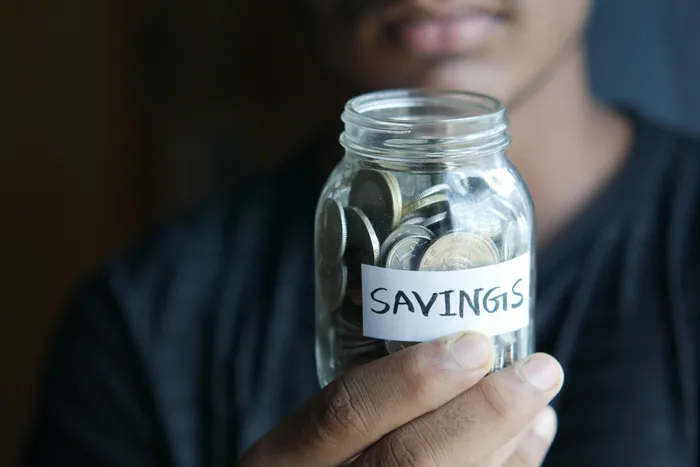
TOUGH TIMES: Savings fatigue has set in
Image: Unsplash
Lower-income groups are the most concerned about the impact of interest rate increases or unexpected expenses.
While increased electricity costs are an elevated concern across all income groups compared to 2024, retirement worries are more pronounced in the upper-income brackets.
People earning more than R20 000 a month remain among the most financially stressed, often qualifying for and taking on more credit than their earning capacity allows.
Geographically, people living in the Western Cape are the most financially concerned, surpassing Gauteng, which reported the most money stress in 2024.
The Western Cape is also where most people worry about unexpected expenses and retirement.
Provinces, such as the Northern Cape, Limpopo, and Mpumalanga, saw significant increases in concerns about electricity costs and interest rates.
Borrowing and debt repayment trends were also highlighted in the survey 63 percent of respondents allocated 30 percent or more of their after-tax income to debt repayment.
48 percent spend over 40 percent paying back what they have borrowed, a level considered unsustainable.
People who are 45 or older are under the most severe debt-repayment pressure, with 60 percent having unsustainable levels of debt.
Those earning over R20 000 a month also face considerable pressure to repay debt.
How people dealt with their money stress was also looked at 37 percent of respondents reported actively cutting back on monthly spending, compared to 43 percent in 2022.
This suggests savings fatigue has set in.
Seeking higher-paying or better jobs is a growing trend, with 35 percent of consumers exploring these options to make ends meet. This has increased from 26 percent in 2022.
Younger consumers are more proactive about sticking to budgets and are almost four times more likely to seek better employment, showing 56 percent more intent to manage money stress than people aged over 35.
The survey also showed a shift in the coping mechanisms people used with their finances.
In 2022 and 2023, people tended to seek better jobs or start a side hustle, while in 2024, debt counselling was the preferred way to relieve financial stress.
Now, there is a growing emphasis on entrepreneurial efforts, multiple income streams and financial independence, reflecting a move towards self-reliance.
Benay Sager, executive head of DebtBusters, says that despite a slight reduction in overall stress, over 90 percent of South Africans with unsustainable debt do not proactively seek professional support, such as debt counselling.
He goes on to say: “This emphasises the ongoing importance of stress-management programmes, financial education, and awareness campaigns that address stigma and promote early intervention.
“It also highlights the need for innovative solutions to deal with money stress, particularly those that help consumers stretch their money further.”

Regionally, people living in the Western Cape are now the most financially concerned, surpassing Gauteng.
Image: Towfiqu Barbhuiya