Henna tattooing incident lands kitten in hospital with partial paralysis
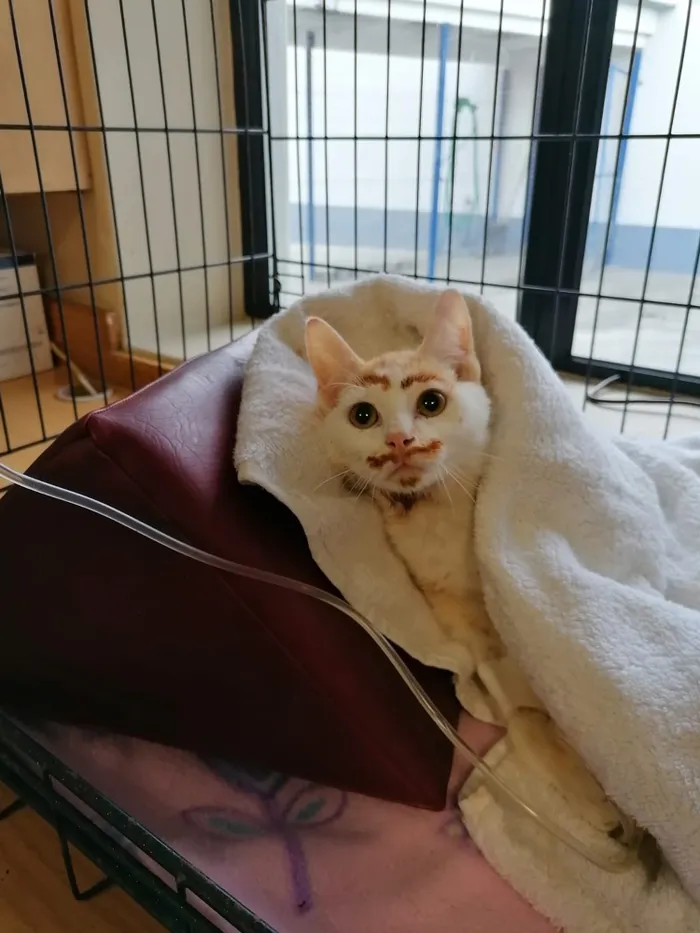
“Every life is precious, even the one of a kitten,” said the owner. Supplied
The Animal Welfare Society of South Africa (AWS SA) has warned pet lovers not to apply make-up, henna or hair dye to their animals following a freak incident.
This comes after a kitten was recently admitted to their hospital with partial paralysis.
It was found that Randal had been “tattooed” on parts of its face with a henna-type mix.
Following investigations it was established that this was not done with any malicious intent.
The owner, who will remain anonymous due to fear of retribution, said: “My heart broke when we found him. There was no evidence of physical harm, but we are in such a state.
“As much as you can love or care for your pets, they have intolerances that we don't know. I urge pet owners to take care, do some research and also educate each other on how to take care of pets.”
Randal is still in a serious but stable condition and receiving supportive therapy.
“Every life is precious, even the one of a kitten. I've been up many nights praying he’s okay. It’s terribly painful the thought of him not recovering as I take him as my little boy, especially after my infertility struggles. He has been a joy in my life and I can’t wait to have him home,” said the owner.
Spokesperson for AWS SA Allan Perrins said: “This regrettable incident could easily have been avoided had the owner been aware of the dangers posed by certain ‘beauty’ products, even those certified safe for human use or consumption.
“Animals are sentient beings and not toys to be played with. What some consider fun can be their worst nightmare.
“We would never want any pet to suffer what Randal is having to endure. Despite our best efforts, his chances of a full recovery are slim and we can only hope that he continues to improve.
“Ignorance is the root cause of many acts of cruelty to animals, so creating awareness with a view to prevention is critical,” he said.
IOL