Metrorail 'not responsible' for crime prevention
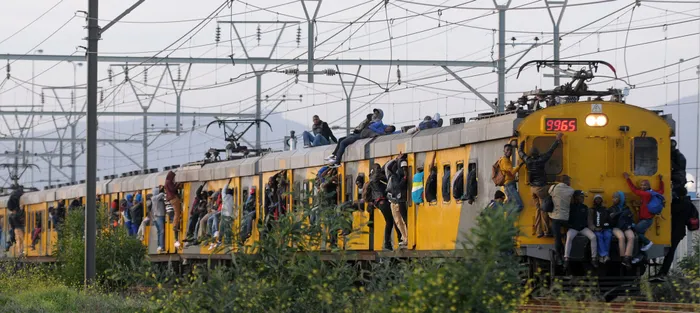
Crime is preventing Metrorail from performing its core function. Picture: Bheki Radebe/ANA Pictures Crime is preventing Metrorail from performing its core function. Picture: Bheki Radebe/ANA Pictures
Metrorail is not taking the crime being perpetrated against its drivers, technicians and infrastructure lying down.
"Our technicians and train drivers are being escorted by armed guards currently in areas where circumstances require it," Metrorail spokesperson Riana Scott told the Cape Argus.
This was in response to a query from the Cape Argus about an invoice from a northern suburbs arms and ammunition company billing Metrorail an amount of R337 249.98 for, among other things, handgun and shotgun manuals, rounds of ammunition and 355 sessions at a shooting range.
"The procurement of appropriate material for our protection services department is not unusual and in line with their operational mandate to protect employees, commuters and infrastructure."
Metrorail and the Passenger Rail Agency of South Africa's infrastructure and staff have come under attack in recent months. Commuters have also suffered at the hands of criminals.
On Tuesday, chairperson of the Western Cape provincial legislature's standing committee on public works and transport, Nceba Hinana said there had been 32 murders and 114 incidents of assault recorded between 2015 and 2017 on trains and railway stations in the Western Cape.
While Metrorail was doing what it could to protect its infrastructure and staff, crime prevention was not its core mandate, Scott said.
"Under current circumstances Metrorail Western Cape does not have the luxury of concentrating on its core mandate i.e. the provision of commuter rail service to communities. It is called to account by various stakeholders to account for the impact of these issues on the rail service," Scott said.
Metrorail could not, however, be held responsible for the socio-economic issues impacting on its ability to provide a reliable service.
"This includes but is not limited to: vagrancy, homelessness, drug abuse, illegal electrical connections underneath and over our infrastructure, informal settlements within the rail reserve due to lack of serviced land, lack of street to street access across/underneath the rail system, disposal of wet waste due to lack of sanitation facilities, unemployment leading to pilfering of rail assets, ongoing trading of so-called 'bucket shops'/illegal scrap dealers that are not closed down and provide ready cash for scrap metal, and unbridled crime in and around rail precincts spilling over into trains and stations.
"None of these are Prasa/Metrorail issues yet have significant impact on the train service. Until these issues are adequately resolved by the appropriate agencies no security strategy or resources will be effective - it cannot be left to Prasa to be solely accountable for crime prevention," Scott said.
However, the commuter agency was within its rights to arm guards and ensure their training was up to scratch.
"It is not unusual for Prasa to procure arms; its protection services employees must undergo appropriate regulatory training as well as refresher training. Our procurement processes comply with policy and Treasury regulations. Metrorail Protection Services is mandated and resourced to protect commuters, employees and assets within rail precincts."
Scott also disputed earlier calls by some to have certain stations declared "red zones".
"It is not stations and trains that are so-called ‘red zones’, the rail system functions within areas beset with crime and overrun by gangsters," Scott said.
"Even if Prasa/Metrorail were to secure trains and stations 100%, the commuters would still be left vulnerable en route to and from their homes, shops, schools etc. Communities live and function in communities where police, fire and ambulance services, educators and learners and animal welfare organisation are equally prone to crime – rail employees and customers are victims as much as everyone else within communities wracked by crime."