Future beckons for matric class
File Picture: MICHAEL WALKER File Picture: MICHAEL WALKER
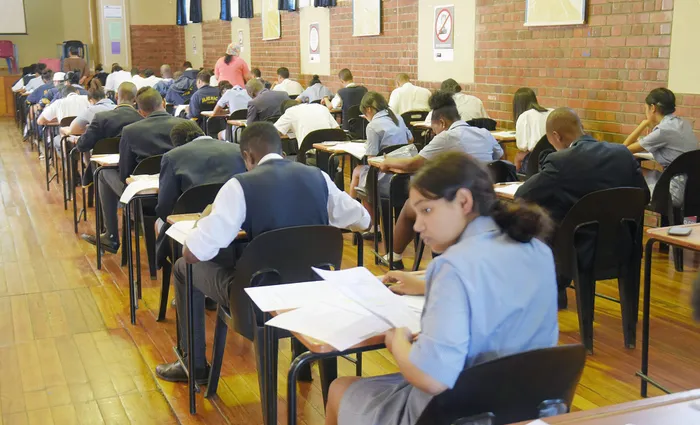
As matric exams wrap up this week, many young people will prepare for the next phase of their lives.
About 796 542 candidates, comprising full-time and part-time pupils, sat for their final exams across the country.
In the Western Cape, most Grade 12 pupils wrote their last examination on Monday, English paper 3, while the rest of the country finishes two days later with agricultural management practices and dance.
Minister of Basic Education Angie Motshekga is expected to announce the national and provincial results on January 3.
Schools and candidates in the Western Cape will receive their results the next day, with the names printed in newspapers on Saturday, January 5.
The deadline to apply for financial aid from the National Student Financial Aid Scheme (NSFAS) for next year is Friday.
The last cycle for applications opened in September, with more than 262 000 applications received.
“During the evaluation process, 44 702 applications with missing supporting documents were detected. The NSFAS has told these applicants to submit the required documents before the closing date,” said the NSFAS’s Kagisho Mamabolo.
“On average, the NSFAS has been receiving 3500 applications a day, with the number increasing drastically to 5 000 a day, which is also significantly higher than the 2018 application cycle.”
With universities and technical and vocational education and training colleges to re-open in late January, first-year students are advised to ensure applications for funding are secured in advance.
“The University of Cape Town (UCT) has the capacity to enrol approximately 4200 first-year undergraduate students in 2019.
“Undergraduate applicants who need financial assistance must submit their applications on the NSFAS online application system,” said UCT spokesperson Elijah Moholola.
He said UCT had measures in place to assist students who required funding who were not covered by the NSFAS.
He said UCT offered gap funding for first-year students from households above the threshold of R350000 to R600000, as well as various bursaries and other funding.
“The Ikusasa Student Financial Aid Programme, which is a partnership between government and the private sector, provides financial and wrap-around support to designated “missing middle” students whose gross family income is less than R600000 annually,” he added.
He said measures they had put in place earlier this year to assist late applications from students who qualified for free education was once-off emanating from former president Jacob Zuma’s announcement of free tertiary education for the poor.
“Prospective students wishing to make late applications are advised to do so via the Department of Higher Education and Training’s central applications clearinghouse.”