Student’s thesis on gatsbys
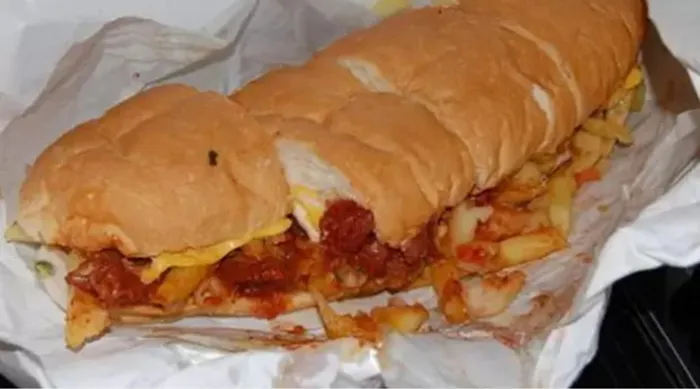
BIG BITE: Cape Flats dish has survived apartheid BIG BITE: Cape Flats dish has survived apartheid
Food has played a big role in how mense survived forced removals and the apartheid state.
And that is why the humble gatsby has now found its way into university, and the annals of history.
Tazneem Wentzel, who graduated with a Master’s in History at UWC, made the Wembley Whopper and the Super Fisheries Gatsby the subjects of her thesis, titled “Producing and Consuming the Wembley Whopper and the Super Fisheries Gatsby: Bread Winners and Losers in Athlone, Cape Town, 1950-1980”, reports the Cape Argus.
The Wembley Roadhouse and Super Fisheries in Athlone are popular outlets on the Cape Flats.
“I chose to write my thesis on takeaways because I figured I should write about something I relate to. I have also always been interested in other ‘sauces’ of history,” says Tazneem.
“Museums and history-making are in our kitchens and in our food. Also, I was working for the District Six Museum huis kombuis project and I realised that the Whopper and the Gatsby emerged at very particular points in history - that is, just after the forced removals, when people were re-esta- blishing themselves on the periphery of the city.”
The thesis explains how the take-aways on the Flats have lived through the apartheid era and the various social and economic challenges.
Indian business owners were seen as a threat to white economic domination, and were subjected to harsh and outrageous business regulations.
She says forced removals under the Group Areas Act saw over 100 traders forced to rebuild their businesses outside city limits.
These family-owned businesses often developed a close “familial” relationships with their customers.
The apartheid state used the ideas of tradition, culture and health through which they sought to divide the races.