'Cops often killed for their guns'
|Published
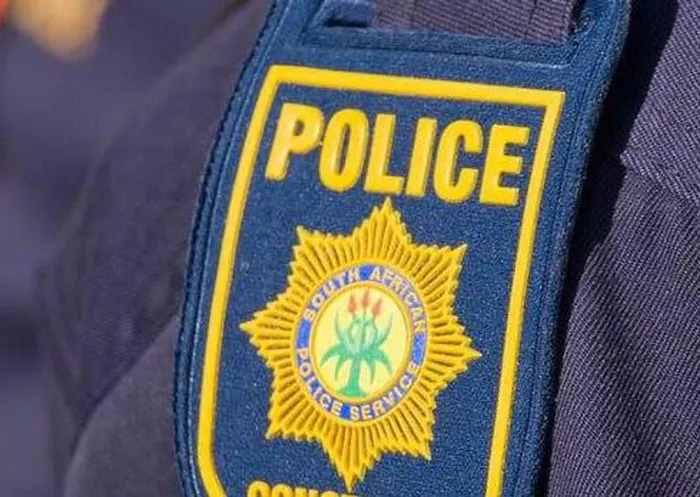
File photo: African News Agency (ANA). File photo: African News Agency (ANA).
Police officers who are murdered or have their firearms stolen are often killed for their weapons.
This is the belief of Guy Lamb, director of Safety and Violence Initiative at the University of Cape Town.
Lamb said this was one of the primary objectives of criminals when murdering police officers.
“Securing a firearm, particularly from a criminal’s point of view, is quite difficult. You’ve either got to steal it from a licensed firearm owner or a police official. In a township scenario, there aren’t many licensed firearm owners and police generally do have a firearm on them so chances of getting a firearm are quite significant,” said Lamb.
In just a few weeks, two law enforcement officers were shot in the head for their guns. An off-duty SAPS member was stabbed to death and two Mfuleni police station members shot at. One was shot in the head and died while the other was shot in the neck and taken to hospital.
On Thursday, Police Minister Bheki Cele revealed that 28 police officers and 49 off-duty members were murdered during the 2018/19 period.
Gauteng had the highest number of officers killed with eight followed by seven in the Eastern Cape and three in Kwazulu-Natal. Of the 77 officers murdered, 24 off-duty officers were victims of crime with seven on duty.
Domestic-related deaths for off-duty officers were at 16. Meanwhile, 11 on-duty officers were killed while attending to an incident and seven on-duty officers' deaths were alcohol-related. Three on-duty and off-duty officers’ deaths were ruled as accidental while five on duty were killed during tracing operations and one at a stop and search operation.
In the 2017/18 crime stats, 28 police officers were murdered while 57 off-duty officers were killed.
Dali Weyers, a senior researcher at the Social Justice Coalition, said for a long time the irrational allocation of police resources was not only putting communities at risk but also police and law enforcement.
“It is creating a space where criminals can act with impunity and can target residents but also law enforcement officers in those spaces with impunity in order to gain access to guns. To make it much easier for them to commit house robberies, car hijackings and truck hijackings or to actually wage gang warfare with,” said Weyers.