PENGUIN POO CAN SAVE PLANET
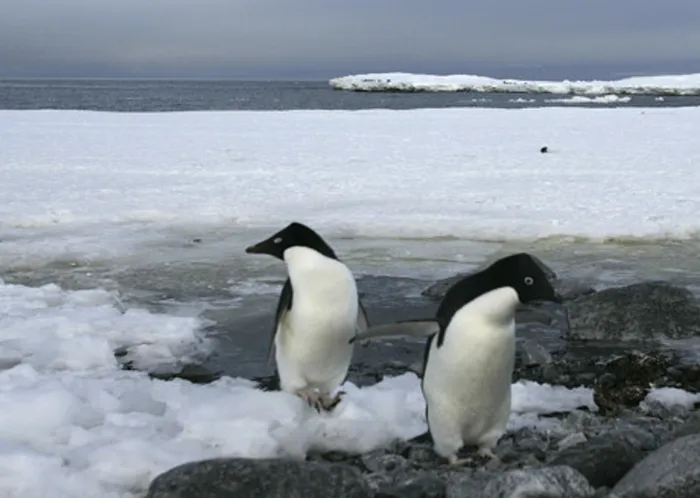
Penguins may be nature’s surprise climate helpers, thanks to their cloud-boosting droppings
Image: Supplied
A new study reckons that penguin poo can fight climate change in Antarctica.
Published in Communications Earth & Environment, the research shows that ammonia wafting off penguin guano seeds extra cloud cover above coastal Antarctica, likely blocking sunlight and nudging temperatures down.
Lead author Matthew Boyer, an atmospheric scientist at the University of Helsinki, said that lab studies had long shown gaseous ammonia can help form clouds.
But "to actually quantify this process and to see its influence in Antarctica hasn't been done," he said.
Along with other seabirds such as Imperial Shags, penguins expel large amounts of ammonia through droppings, an acrid cocktail of feces and urine released via their multi-purpose cloacas.
When that ammonia mixes with sulfur-bearing gases from phytoplankton - the microscopic algae that bloom in the surrounding ocean - it boosts the formation of tiny aerosol particles that grow into clouds.
To capture the effect in the real world, Boyer and teammates set up instruments at Argentina's Marambio Base on Seymour Island, off the northern tip of the Antarctic Peninsula.
Over three summer months - when penguin colonies are bustling and phytoplankton photosynthesis peaks - they monitored wind direction, ammonia levels and newly minted aerosols.
Particle counters told the same story: cloud-seeding aerosols surged whenever air masses arrived from the colony, at times thick enough to generate a dense fog.
Chemical fingerprints in the particles pointed back to penguin-derived ammonia.