PLAN FOR SAFER SCHOOLS
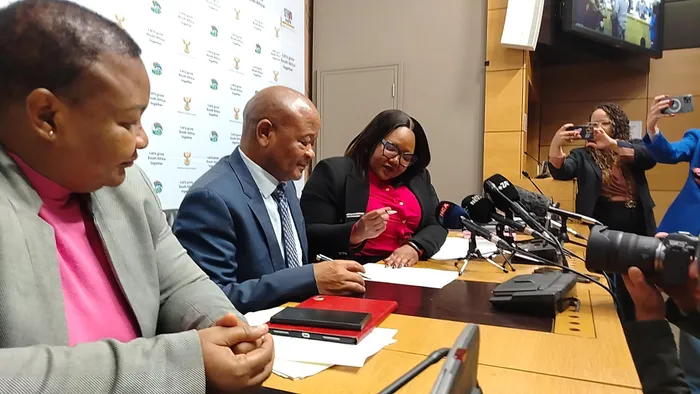
PACT: Minister of Police Mr Senzo Mchunu and The Minister of Basic Education Siviwe Gwarube
Image: Genevieve Serra
THE Minister of Basic Education Siviwe Gwarube and Minister of Police Police Senzo Mchunu will be going back to basics for their new Safe Schools campaign.
The ministers launched the Collaborative Implementation Protocol on School Safety in Cape Town yesterday.
The Safe Schools Protocol aims to tackle the alarming rates of violence, crime, and insecurity prevalent in schools.
It is set to emphasise shared responsibility, integrating stakeholders such as civil society organisations, parents, school governing bodies (SGB), and learners into the safety ecosystem.
Mchunu said they had identified 283 schools nationally located in hotspots and that visible policing would be beefed up in those communities.
Gwarube outlined the safer schools strategy which aimed at ensure the safety of both learners and educators.
Gwarube said principals would be educated on what to do when there was an incident of violence or whether a teacher was found to be on the wrong side of the law.
She said: “The plan is not only to protect learners, it is also to protect staff.” Meanwhile, Mchunu added: “We will not tolerate a rude child in the class.”
Gwarube said any teacher involved in sex crimes regarding a learner who was a minor, would face being suspended and dismissed when asked about the Grade R teacher facing charges of sexual grooming of a child and exposing a child to explicit material. The case involves a 13-year-old boy at Harvester Primary School.
Vanessa le Roux of Parents for Equal Education SA (PEESA) said she welcomed the plans, but wanted to see the full details.
She added: “We want to see exactly what this safety plan is, because they always sign laws and policies that we have found about through the media.
“SGBs have little to no knowledge, especially in townships schools, majority of the time. The Principal behaves as if the school belongs to him/her, and they become the SGB.
“Why not consult with organisations in the field, so that we can tell them the truth? It is our children, and they make too many mistakes and decisions for our children.”