SEX WORKERS FIGHT FOR RIGHTS
Battle goes to the Western Cape High Court
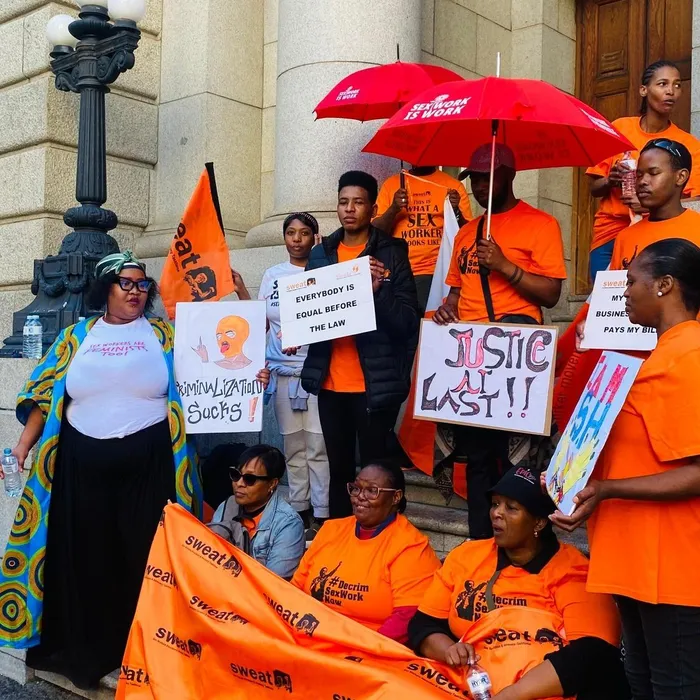
In a landmark case, various organisations are pushing for the decriminalisation of sex work in South Africa, arguing that current laws violate the rights of sex workers.
Image: Asijiki Coalition / Facebook
A number of organisations are gearing up as they advocate for the decriminalisation of sex work in South Africa which will highlight the human rights violations suffered by sex workers.
The main application at the Western Cape High Court, brought by S.H and Sex Workers Education and Advocacy Taskforce (SWEAT), against the Minister of Justice and Correctional Services and others.
The applicants challenge the constitutionality of provisions under the Sexual Offences Act 23 of 1957, the Criminal Law (Sexual Offences and Related Matters) Amendment Act 32 of 2007 (SORMA), and the City of Cape Town By-Law on Streets, Public Places, and the Prevention of Noise Nuisances (the By-Laws), insofar as they criminalise the provision and solicitation of sex work.
On Monday and Tuesday, the groups made oral submissions in their bid for admission. The main hearing will be on 18 to 20 May 2026 at the Western Cape High Court Division, Cape Town.
According to the Asijiki Coalition for the Decriminalisation of Sex Work (Asijiki) - a group of sex workers, activists, advocates and human rights defenders who advocate for law reform - the decriminalisation of sex work would allow sex workers to function within a human rights framework
They are demanding the removal of criminal charges against sex workers, the operation of brothels and individual sex workers as ordinary businesses.
They also seek to minimise discrimination and stigmatisation around sex work, which will in turn enable sex workers to access basic services more easily
The groups are also fighting for their right to report abuse and crime to the police without monitoring.