RAF IS CRASHING
How Road Accident Fund's R500bn black hole is affecting victims
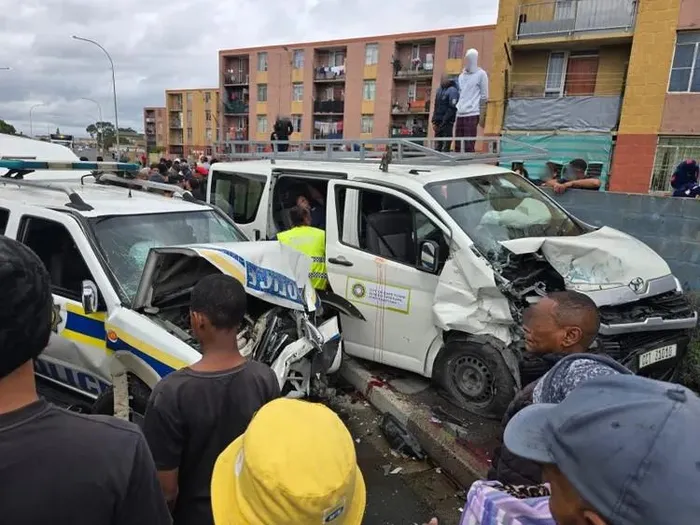
SAFETY NET: Cape Town acciident
Image: Supplied
In 2021, Sipho Mdluli’s life was irrevocably altered when a drunk driver smashed into his taxi, leaving him with a shattered leg and no means of supporting his family.
Now, three years later, he still waits for the Road Accident Fund (RAF) to settle his multimillion-rand claim—a situation that has left him borrowing from relatives just to survive.
Mdluli’s plight is not isolated; it echoes the stories of countless others caught in a system meant to protect them.
The Road Accident Fund, financed through a fuel levy of R2.18 per litre, was designed as a safety net for drivers, passengers, and pedestrians.
However, the levy has remained stagnant since 2019, while claims and administrative costs skyrocket.
Today, the Fund’s liabilities stand at an astonishing R518 billion against assets of only R33 billion—a staggering 15 times more than what it possesses.
The financial instability has prompted the Auditor-General to question the Fund’s viability, calling it a threat to its continued existence.
The heart of the problem lies within the current funding model, which critics argue requires urgent reform.
Songezo Zibi, chair of Parliament’s Standing Committee on Public Accounts (SCOPA), emphasises that a “broken RAF” has led to dire consequences for accident victims.
“A broken RAF means all these people simply don’t have access to critical services — medical transport, therapy, assistive devices. It is not just a financial crisis, it’s a human one.”
Zibi believes the current funding model is the root of the problem.
“This is a funding problem that the government and Parliament must solve. It’s not the fault of RAF management alone. The model doesn’t work, and the obligations placed on the fund don’t work either.”
He reckons changes like these could alleviate cash flow pressures and reduce the risk of misuse of funds.
Zibi saaid: “The regulations say that for victims’ expenses, the RAF must pay everything upfront. That’s not necessary. Why can’t it be budgeted on an annual basis? You don’t need to get all your money at once.”
His vision also includes integrating third-party insurance premiums into vehicle licensing to diversify funding sources and ensure sustainability.
While SCOPA grapples with financial mismanagement allegations, mounting calls for accountability, including potential charges against former RAF officials, highlight the urgency for reform.
As long as the RAF remains bogged down by inefficiencies and neglect, victims like Mdluli will continue to wrestle with uncertainty and despair.
Former RAF CEO challenges SCOPA’s authority to inquire about the entity’s financial management.
Image: SAPS