Red tides and pollution cause coastal concern
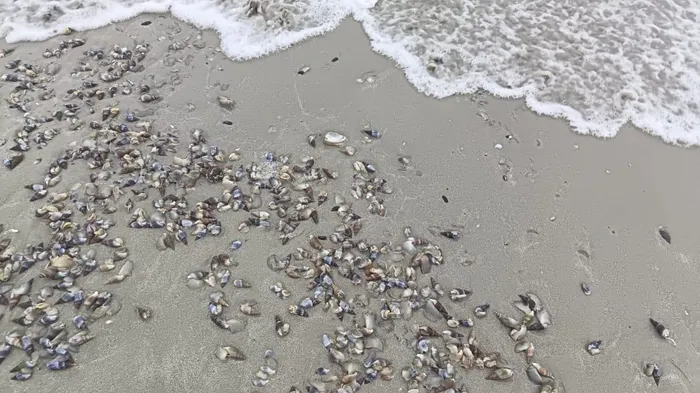
Mass fish die-off in Mossel Bay linked to pollution.
Image: Supplied
The Department of Forestry, Fisheries and the Environment (DFFE) has warned the public against consuming shellfish and washed-out marine life as red tides continue to affect parts of South Africa’s Western Cape coast.
In an update issued on Sunday, January 4, the department confirmed that the earlier incident in which large numbers of dead white mussels, whelks and other shellfish washed ashore has remained confined to St Helena Bay and Elandsbaai on the West Coast.
According to the department, observations by Fisheries Control Officers and satellite imagery show visible red tides stretching from Elandsbaai northwards for about 100 kilometres north of the Olifants Estuary.
While no fish or shellfish mortalities have been linked to these blooms, the department cautioned that the health risks remain significant.
The department said: “All shellfish, irrespective of being washed out or collected from shore or subtidal, should not be eaten.”
The DFFE said similar conditions have been identified further south, with satellite imagery and field reports confirming a red tide in Walker Bay near Hermanus.
The department noted that this bloom is bioluminescent, producing visible flashes of light at night, but stressed that the absence of reported mortalities does not reduce the potential danger to human health.
The DFFE added: “There have been no reported fish or shellfish mortalities reported with this red tide, but a cautionary approach remains that no shellfish be collected and eaten.”
Meanwhile on the Southern Cape coast, the department reported a mass fish mortality event further east at the Hartenbos Estuary in Mossel Bay, which it said was unrelated to red tides.
The DFFE blamed the die-off to pollution, stating that it was “the result of sewerage discharge and resultant eutrophication and ammonia toxicity”.
The department said there are multiple factors contributing to recent fish and shellfish washouts along the West and South Coasts but reiterated that the public should not consume any marine animals found on beaches or in affected waters.
“Members of the public should refrain from eating any washed-out marine animals as they carry significant health risks, rendering them unsuitable for consumption,” the department warned.
The DFFE said it would continue monitoring the extent of red tides and related environmental impacts along both coastlines as part of its ongoing response.
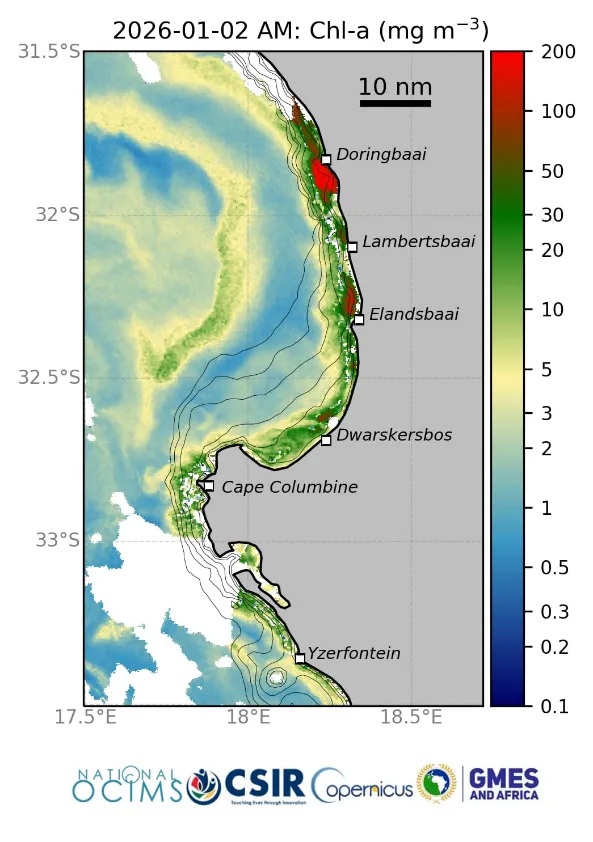
Satellite image of chlorophyll concentrations on the West Coast December 2.
Image: Supplied