Cape Town's new housing tenders slammed by ratepayers and activists
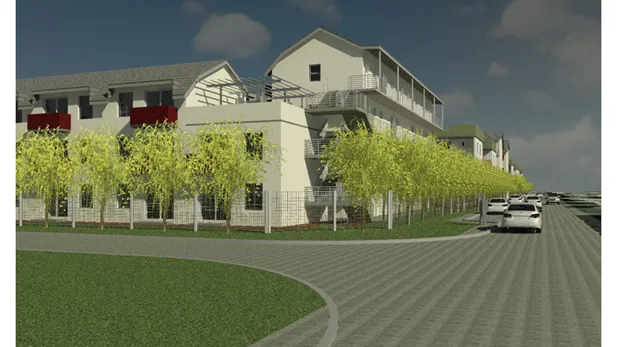
The City’s pioneering affordable housing programme is characterised by well-packaged and de-risked properties fuelled by public private partnerships.
Image: City of Cape Town
Ratepayers and housing rights activists are rallying against the City’s new housing tenders worth R125.6 million, claiming exclusion from the public participation process and protesting against spatial apartheid.
Last week the City announced that the incentivised proposed developments included Brackenfell, Ottery and Lansdowne.
But housing rights activists such as Ndifuna Ukwazi (NU) said they have heard the script before, where public land was set to be released for affordable housing while ratepayers cited that old infrastructure could not cope.
The City’s Mayco Member for Human Settlements, Councillor Carl Pophaim, stated that it would boost the economy, with the closing date for tender submissions being extended to 17 March.
Sites earmarked include: Lansdowne (the corner of Smuts and Ruby Roads), Northpine (220 Buiten Street) and Brackenfell (Affodil Street),
Pophaim added: ‘We currently have a pipeline of over 12 000 residential units, including in the central Cape Town inner city areas.
However, Buhle Booi, Head of Political Organising at NU, argued that they had seen the same “promises” before.
Booi said: “A typical example of this is the 2017 Affordable Housing Prospectus that announced the release of 11 sites in Woodstock, Salt River, and the inner city.
“Nine years later, the City is auctioning off a site on Upper Canterbury Street that was outlined for affordable housing in that very same prospectus.
“Amongst the things that we condemn is the auctioning of public land for short-term cash injection."
Booi added that 400 000 households are waiting for homes in this city and that 12 000 units were barely a drop in the ocean.”
Rashard Davids of the Civic Association of Rondebosch East called for densification to end.
He said: “We, as the residents, were never part of a public participation process in terms of the provisions of the Municipal Asset Transfer Regulations and in terms of the Municipal Systems Act.
“We are saying to the City that you are engaging in densification in our areas where we are living on top of each other and the overload of failing infrastructure.
“This implements the apartheid-style infrastructure and spatial planning; we oppose that with every fibre in our body, we are saying 'open up the city to all.'”
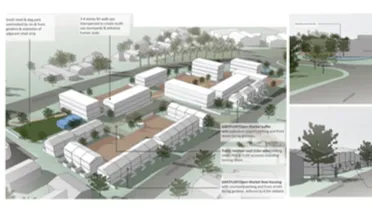
The City’s pioneering affordable housing programme is characterised by well-packaged and de-risked properties fuelled by public private partnerships.
Image: City of Cape Town