First Braille coastal environmental education signage launched in Blaauwberg
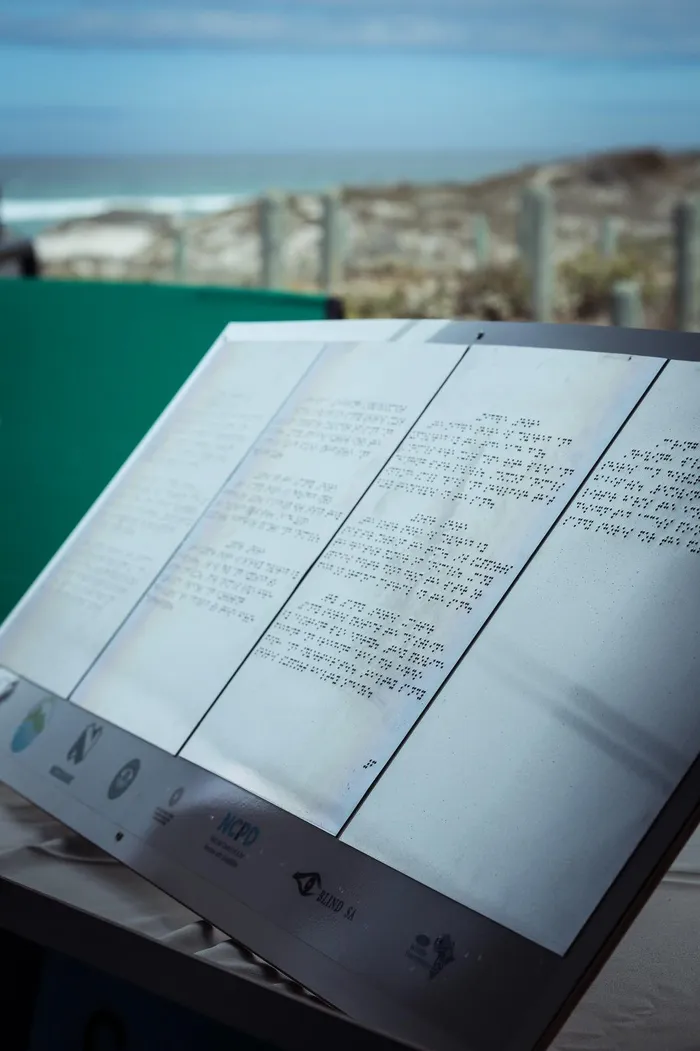
NICE TOUCH: Braille coastal environmental education signage at Eerste Steen in Blaauwberg
Image: Suppled
THE Wildlife and Environment Society of South Africa (WESSA) has unveiled South Africa’s first Braille coastal environmental education signage at Blaauwberg Nature Reserve’s Eerste Steen this week.
According to WESSA, the sign for the visually impaired is a significant step towards creating more inclusive coastal experiences for all.
This pilot initiative, sponsored by Nedbank, is delivered through WESSA’s Green Coast programme and designed to enable blind and partially sighted visitors to engage independently and meaningfully with coastal ecosystems.
Blaauwberg Nature Reserve was selected as the launch site as it is the first WESSA Green Coast site in South Africa, making it a strategic location to pilot the initiative ahead of expanding to additional Green Coast and, in time, Blue Flag sites along the coastline.
WESSA CEO Cindy-Lee Cloete said: “Today is not just about signage. It is about access. It is about dignity. And it is about who gets to experience South Africa’s magnificent natural heritage – and how.
“This is a national first, and an important one. Our beaches and nature reserves may be public spaces, but for blind and partially sighted people, meaningful engagement with these environments has largely remained out of reach.
“For WESSA, this project says that the gap is not acceptable.
“For a century, WESSA has worked to enable people to care for the earth. The next century asks something more of us. It asks that we ensure everyone can experience it.”
Minister of Forestry, Fisheries and the Environment, Willie Aucamp, added: “We are gathered here, not simply to unveil a set of signboards, but to mark a significant step forward in how we share South Africa’s natural heritage with all her people. This revitalisation is about more than just fresh paint or new timber – it is about inclusivity. We are moving from a philosophy of ‘look and read’ to one of ‘touch, listen, feel and experience.”
Abraham Allies from Blind SA hopes this enables people like him to explore and learn more.
He added: “For a visually impaired visitor, this means arriving at a coastal site and not having to rely entirely on another person to explain what the visual element is all about.
“It means being able to read with your own hands about the environment, the wildlife, the history and the significance of this place.
“It means being acknowledged as a person who belongs here. Looking ahead, we are excited about the possibilities for future collaboration. This launch should not be the end, but the beginning.”
City of Cape Town deputy mayor Eddie Andrews said he was proud of the initiative, opening up the city to more of its residents.
He added: “By bringing Braille signage to our coastal spaces, we’re proving that thoughtful design is one of the most powerful tools we have to restore dignity, independence, and a real sense of belonging for every person who comes to the shore.”
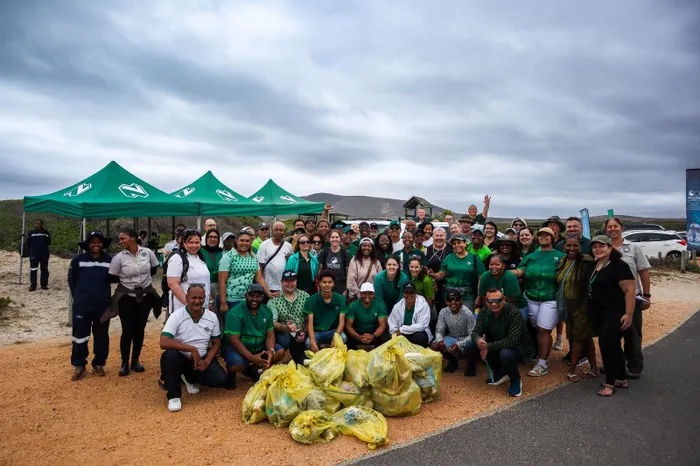
PROUD DAY: Conservation and blind community members
Image: Supplied