CITY WIDENS SECURITY NET
City of Cape Town has trumpets new social assistance package as the widest free basic services deal in the land
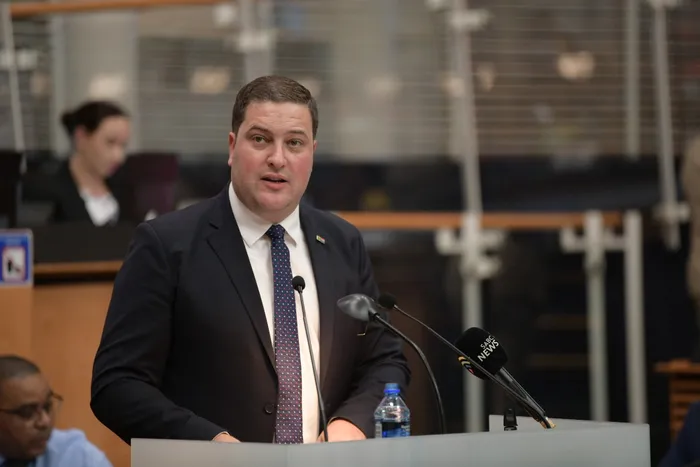
PLAN: City of Cape Town Mayor Geordin Hill-Lewis
Image: File Photo
THE City of Cape Town has trumpeted their new social assistance package as the widest free basic services deal in the land.
Drawn up in their nuwe 2025/26 draft budget, pensioners and financially-challenged will get a comprehensive range of benefits for water, electricity and rates.
According to the City, of South Africa’s metros, the Cape metropole has tabled the most inclusive package for indigent relief and rates rebates based on an analysis for each metro.
This is in line with Statistics South Africa’s new non-financial census of municipalities, published in March 2025, which finds that Cape Town has the widest free basic services reach.
In a “pro-poor” first for the period 2025/26, indigent customers will receive 15kl of water for now charge.
Mense with properties valued at or below R450 000 or have a monthly income of less than R7 500 will receive 100% rates relief.
Homes with a value of R500 000 or with income of less than R7 500 will receive “lifeline electricity”.
This means that mense will get a block of free electricity, with the City giving an example that households that use less than 250kWh per month will get up to 60kWh for free.
Meanwhile, for pensioners with less than R2 200 monthly income also qualify for these benefits, regardless of property value.
Mayor Geordin Hill-Lewis says: “Cape Town’s new Invested in Hope budget takes another major step towards our vision of building a city of hope for all.
“The budget contains SA’s most inclusive social package to help lower income households and pensioners, as well as the country’s biggest ever pro-poor infrastructure budget of R39.7bn over three years, 75% of which will directly benefit lower income households.
“Over the next three years, these investments alone will create around 130 000 construction-related jobs.
“With SA’s lowest unemployment rate, Cape Town is already the city where a person is most likely to find a job, and we plan to do much more to grow our economy in the years to come to the benefit especially of lower income households.”