LIVING IN THE CROSSFIRE
Special Report: Cape Flats residents endure a bloody September
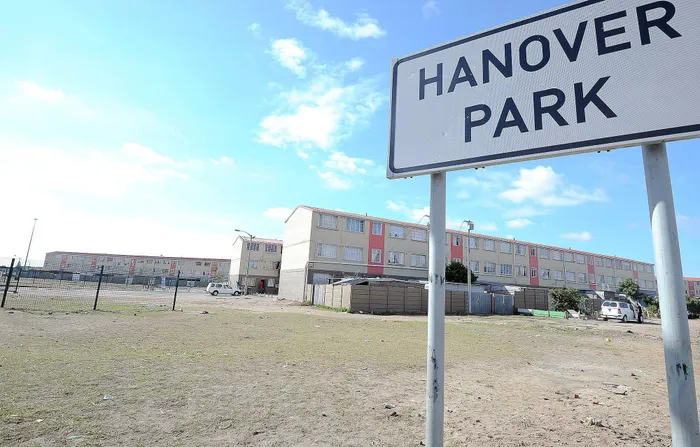
GANG-RIDDEN: Hanover Park
Image: Leon Lestrade
IT'S been a bloody September in Cape Town and for residents across the Cape Flats, it’s not just a headline, it’s a daily reality.
With nearly 500 gang-related shootings reported in the Western Cape in just one month, families have been forced to live, learn, and even celebrate under fire.
In Hanover Park last weekend, matriculants dressed for their big night as bullets ripped through the streets. Parents pray their children make it home from school.
Hanover Park Community Policing Forum (CPF) media liaison Kashiefa Mohammed asked why the future generations have to duck and dive due to bullets that have riddled their society.
Mohammed says: “The community of Hanover Park is in so much fear.
“Our children are scared to play outside our community, go to sleep with the sound of gunshots and wake up with the sound of gunshots.
“Our children are dying, our youngsters can’t walk where they want because they are targeted by gangsters.”
Mohammed further appealed for more police visibility in the area, not only when they call when a shooting occurs to ensure that the community is constantly safe.
A recent gun violence incident saw a Grade R teacher at Yellowwood Primary in Mitchells Plain calming her learners as bullets rang out outside the school; another reminder that even learning isn’t safe.
Former gang leader Shewaan “Tantjies” Jumat knows the streets too well and goes by the slogan "Raak rich in mind or get left behind."
He started a gang at 14, and ran drug operations for nearly two decades and now spends his time trying to keep others from following the same path.
Jumat shared: “My dream is to work with children. I want to go to as many schools as possible and to talk to them and consult with them. Some children would tell me they are doing drugs, but don’t want to do it anymore.
“I try to educate people through videos about the streets. The youth is not making it better for themselves. If you see what they post on social media and then the gangs target them.”
He advised laaities not to walk around in groups or to stand on the corners in groups, but rather to stay inside the house to prevent being approached by a gang and not to glamourise the life of crime.
For older residents, the violence feels both familiar and worse than ever.
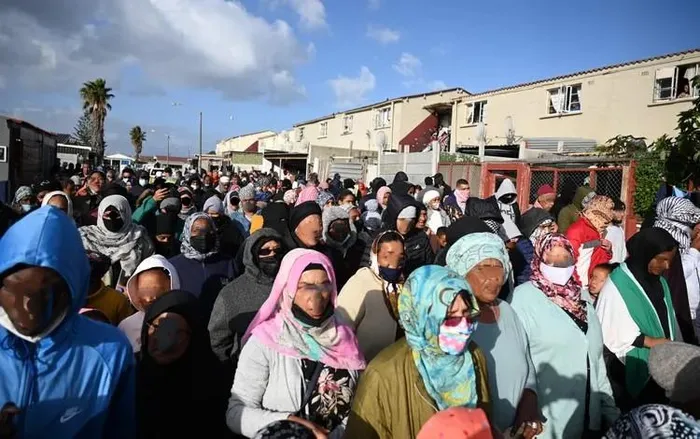
RESISTANCE: Hanover Park mense on the march
Image: Ayanda Ndamane
Moutie Abrahams, who grew up in Wynberg and has lived in Surrey Estate since 1974, is preparing to celebrate his 64th birthday in a few weeks’ time said the gang shootings have worsened since his youth.
Abrahams added: “In my time, if the gangs fought they would fight amongst themselves and there were a few innocent people who were killed in my time due to gang related shootings.
“It has most definitely worsened, there is no doubt about that.
“When the twins [Staggie brothers] were killed, I thought that would be the beginning of the end of the Hard Livings. And now there are so many breakaway gangs.”
According to research by Global Initiative Against Transnational Organised Crime (Gi-Toc) analyst Brandon Davis, the surge in shootings is linked to gangs splitting and new ones emerging.
Davis said: “Gangs are essentially splitting, giving rise to new breakaway gangs.
“There are many reasons for these splits – it could be due to internal conflict about the way the gang is being run, leading to the formation of factions and ultimately leading to these groups breaking away.
“This has seen these groups turn on each other as they now compete with each other over resources and turf. More splits mean more gangs, which can lead to more violence.”
And it’s not just new gangs; old alliances are also collapsing.
Davis explained: “For example, in Hanover Park, the Americans gang split, leading to the formation of the Incredibly Gifted Bastards (IGBs). This led to vicious gang wars in the area between the two gangs.”
Another contributing issue that has driven the increase in shootings is that guns and ammunition are more readily available to gang members.
Davis said this was not the case before former police official Christiaan Prinsloo stationed in Vereeniging in Gauteng sold more than 2 000 guns to gangs on the Cape Flats.
It was reported that guns he sold to the skollies on the Cape Flats were linked to 1 000 murders.
Prior to this saga guns were usually kept by senior gang members and only handed out when a shooting or assassination needed to take place after which it was returned.
Davis explained: “Guns are coming in from numerous sources, mostly domestically from civilians, private security, the police and the military.
“The number of bullets fired during shooting incidents have increased drastically over the past few years.
“This is because gangs simply buy bullets from the legal market, either from friends or family who have gun licenses, or from security companies they have ties to.”
He adds that another factor includes the Fancy Boys gang who have been expanding rapidly across the province, poaching other gang members, arming them and contesting rivals' territories.
Davis said: “They have been clashing with some of the biggest and most established gangs, including the Americans and Hard Livings, resulting in huge levels of violence.”
As community leaders plead for police visibility and former gangsters try to steer the next generation away from crime, residents cling to a small hope: that the next month won’t be another bloody one.

EXPERT Brandon Davis joined the GI as an Associate in February 2024.
Image: Global Initiative against Transnational Organized Crime