PICS: Death toll in Sri Lanka attacks rises to 359
|Published
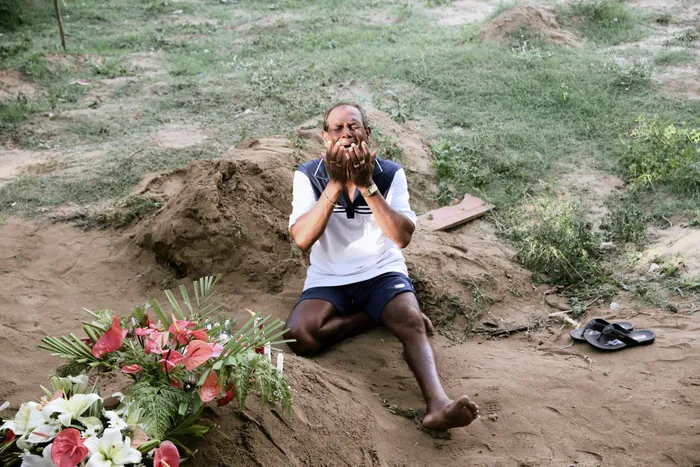
A man mourns at a grave of a victim, two days after a string of suicide bomb attacks on churches and luxury hotels across the island on Easter Sunday. Photo: Athit Perawongmetha/Reuters A man mourns at a grave of a victim, two days after a string of suicide bomb attacks on churches and luxury hotels across the island on Easter Sunday. Photo: Athit Perawongmetha/Reuters
Sri Lankan police said on
Wednesday they had detained 18 more people for questioning over
the Easter Sunday attacks on churches and hotels, claimed by the
Islamic State group, as the death toll climbed again to 359.
The extremist Islamic State group made its claim after Sri
Lankan officials said the suicide bombings in Sri Lanka were
carried out in retaliation for attacks on two mosques in New
Zealand that killed 50 people in March.
Police spokesman Ruwan Gunasekera said the death toll had
risen to 359 from 321 overnight, with about 500 people wounded,
but did not give a breakdown of casualties from the three
churches and four hotels hit by the bombers.
Islamic State said through its AMAQ news agency the assaults
in Sri Lanka were carried out by seven attackers but gave no
evidence to support its claim of responsibility. If true, it
would be one of the worst attacks carried out by the group
outside Iraq and Syria.
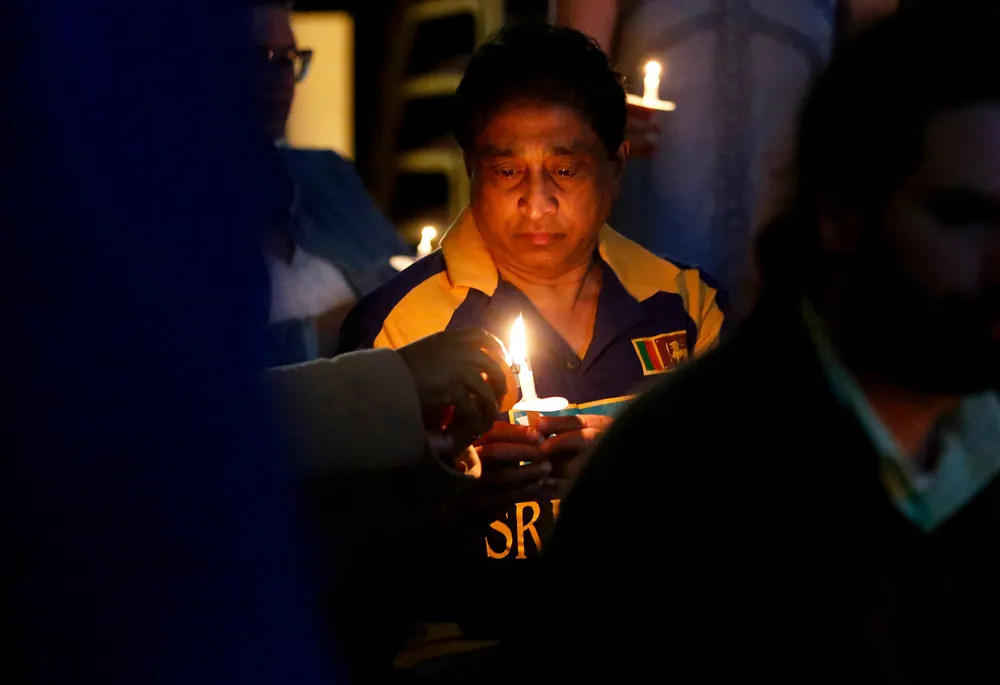
University of Dubuque professor Lalith Jayawickrama lights his wife's candle during a vigil at Blades Chapel on the University of Dubuque campus. Photo: Eileen Meslar/Telegraph Herald via AP
Junior minister for defence Ruwan Wijewardene told
parliament on Tuesday two Sri Lankan Islamist groups - the
National Thawheed Jama'ut and Jammiyathul Millathu Ibrahim -
were responsible for the blasts, which went off during Easter
services and as hotels served breakfast.
Police continued searching homes across the Indian Ocean
island nation overnight, leading to the detention of 18 more
people. That brings the number of people taken in for
questioning to close to 60, including one Syrian.
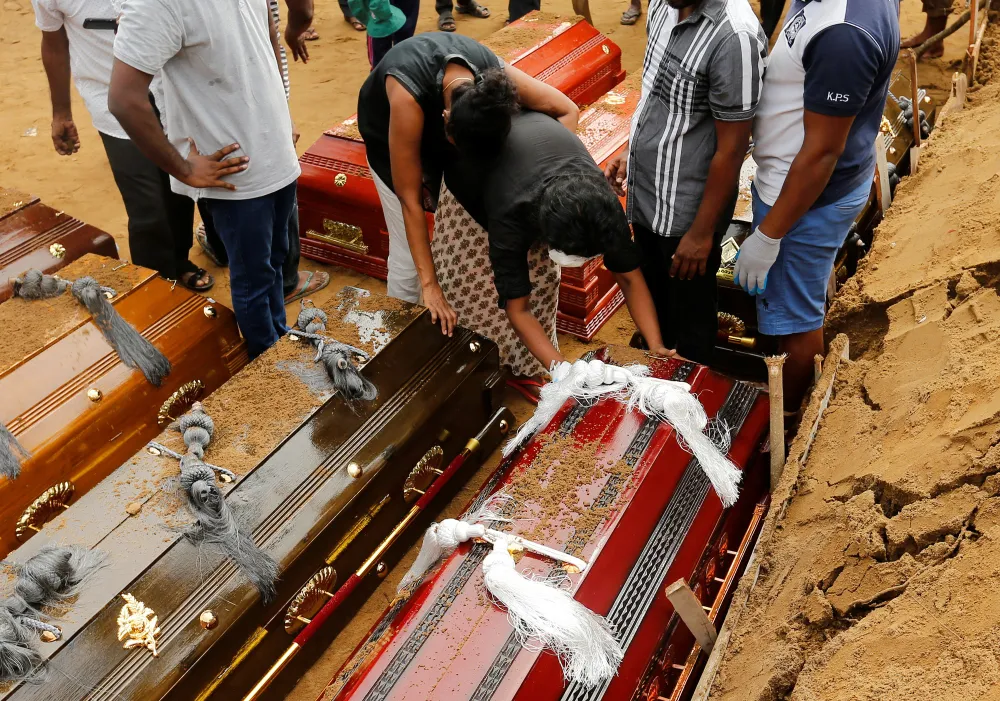
Coffins are laid in the ground during a mass burial for victims at a cemetery near St Sebastian's Church in Negombo. Photo: Thomas Peter/Reuters
The overnight raids included areas near the Gothic-style St
Sebastian church in Negombo, north of the capital, where scores
were killed on Sunday, a police spokesman said. An unspecified
number of people were detained in western Sri Lanka, the scene
of Muslim riots in 2014.
"Search operations are going on everywhere, there is tight
checking of Muslim areas," a security source said.
The Easter Sunday bombings shattered the relative calm that
has existed in Buddhist-majority Sri Lanka since a civil war
against mostly Hindu, ethnic Tamil separatists ended 10 years
ago, and raised fears of a return to sectarian violence.
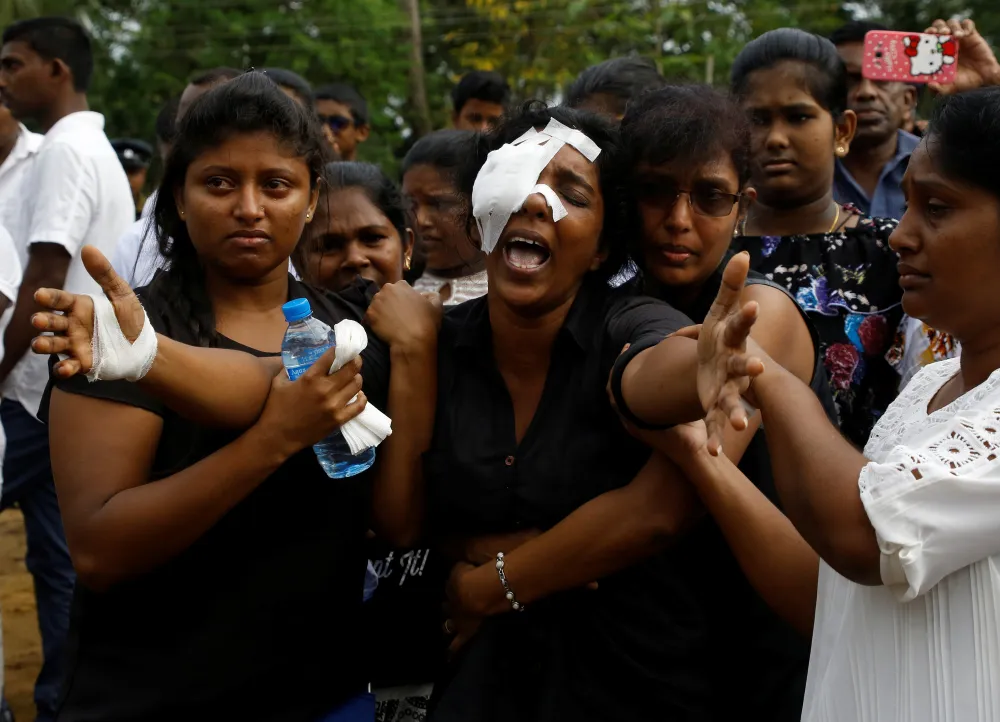
A woman who lost her husband and two children during the bombing at St Sebastian's Church yells towards the graves during a mass burial for victims at a cemetery near the church in Negombo. Photo: Thomas Peter/Reuters
Sri Lanka's 22 million people include minority Christians,
Muslims and Hindus. Until now, Christians had largely managed to
avoid the worst of the island's conflict and communal tensions.
The attacks have already foreshadowed a shake-up of Sri
Lankan security forces, with President Maithripala Sirisena
saying on Tuesday night he planned to change some of his defence
chiefs after criticism that intelligence warnings of an Easter
attack were ignored.
Three sources told Reuters that Sri Lankan intelligence
officials had been warned by India hours before the blasts that
attacks by Islamists were imminent. It was not clear what
action, if any, was taken.
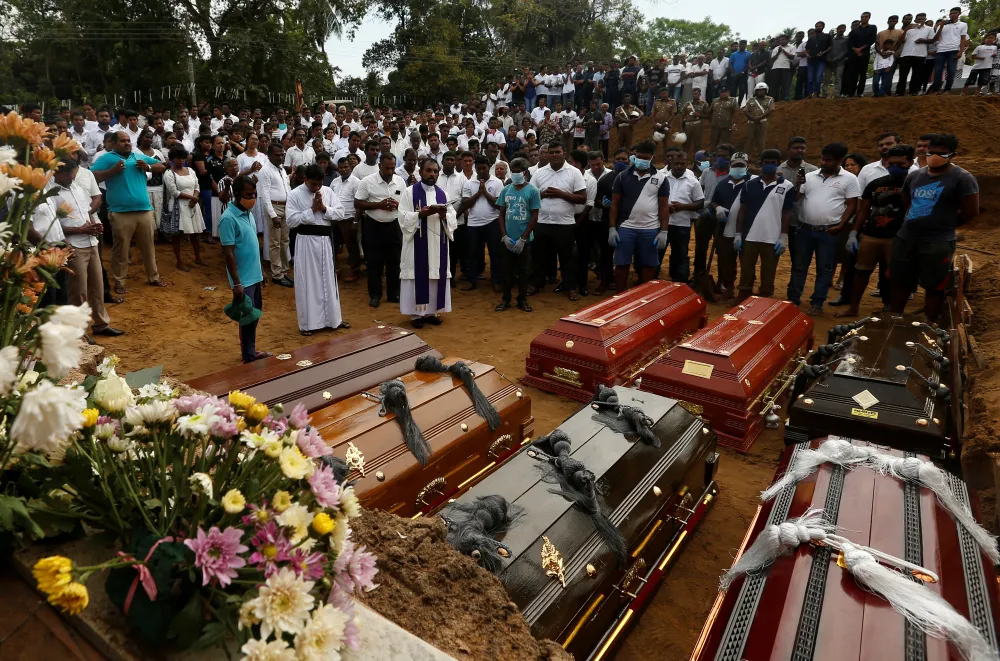
People participate in a mass funeral in Negombo. Photo: Thomas Peter/Reuters
Most of those killed and wounded were Sri Lankans, although
government officials said 38 foreigners were also killed. That
included British, US, Australian, Turkish, Indian, Chinese,
Danish, Dutch and Portuguese nationals.
The UN Children's Fund said 45 children were among the
dead.
Junior defence minister Wijewardene said investigators
believed revenge for the March 15 mosque attacks in the New
Zealand city of Christchurch was the motive but did not
elaborate. The attacks during Friday prayers in Christchurch
were carried out by a lone gunman.
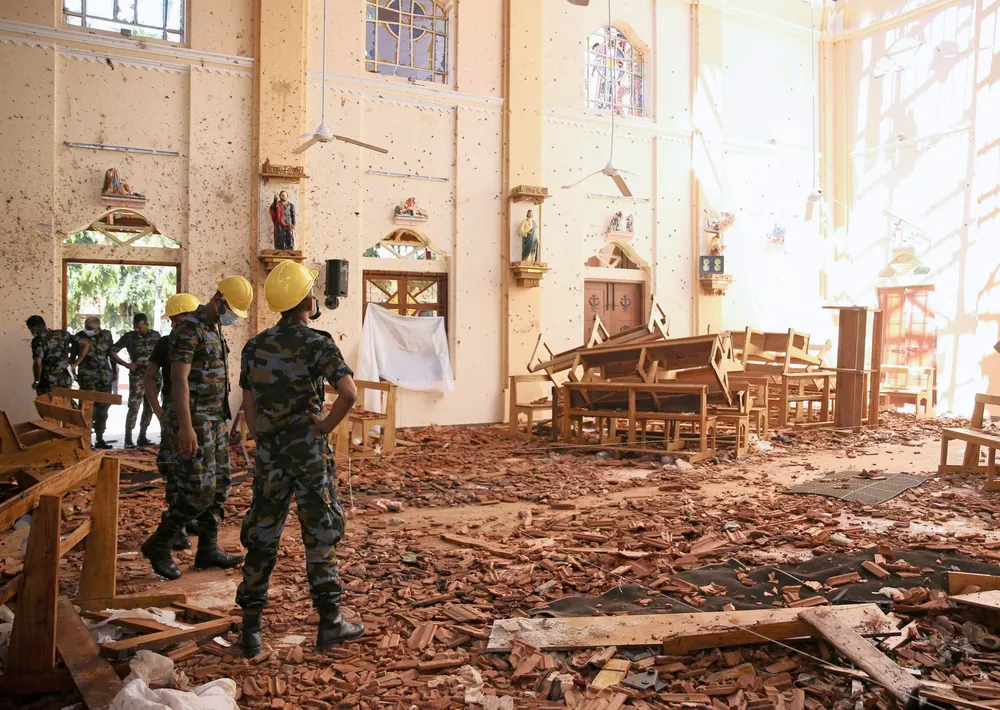
A view of the damage at St. Sebastian Catholic Church, after bomb blasts ripped through churches and luxury hotels on Easter. Photo: Athit Perawongmetha/Reuters
The Sri Lankan government has imposed emergency law and an
overnight curfew. It said it has also blocked online messaging
services to stop the spread of inflammatory rumours that it
feared could incite communal clashes.
The US Federal Bureau of Investigation is assisting with
investigations.
Reuters