EYE SPY - How CCTV helps fight against crime and its blindspots
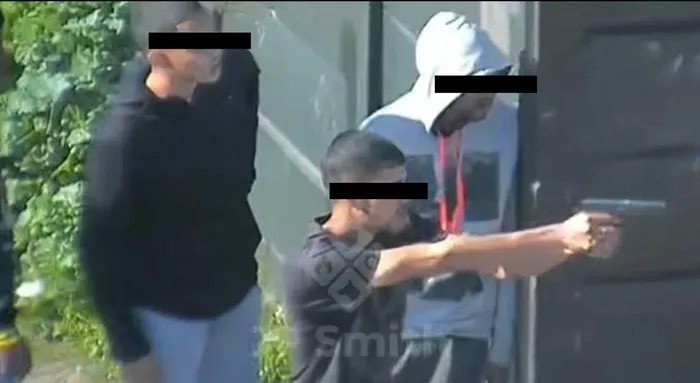
Attack Caught on camera
Image: Facebook
WITH a surge in crime across the Cape Flats, authorities are depending on CCTV footage to combat crime.
Calls have been made for more surveillance of gang-infested areas, public transport hubs and walkways and Cape Town’s roads.
Flare-ups in gang shootings caught on camera can help identify shooters.
Robberies and shootings in public spaces can be deterred by skelms just knowing that the cameras are watching.
And smash-and-grabs on roads like Jakes Gerwel, R300 and around Century City also have mense on edge with Christmas holiday traffic congestions leaving cars vulnerable to skelms.
The City’s mayco member for Safety and Security, JP Smith last week took to his Facebook page to show a shooting caught on camera by CCTV footage.
The video clearly shows a group of men standing on the corner, with one guy taking out a gun and opening fire from behind a block of flats. The video then shows another group of men hiding behind a wall as they are seen shooting at unknown assailants.
Smith explained: “Our CCTV network continues to expose the harsh reality unfolding daily in some of our communities. This footage highlights the growing threat of gangsterism, where young adults and even children are increasingly being recruited into criminal groups.
“Cameras are not the final solution. They are one tool within a broader crime-prevention strategy. Many crimes occur within seconds, with perpetrators quickly leaving the scene, as seen in smash-and-grab incidents. CCTV footage provides a credible form of evidence that can be used to present in court, helping to secure a conviction.
He added: “Investigations are reserved for the function of the South African Police Service. “And while we support SAPS by providing such footage when called upon, if municipalities were granted the authority to investigate such crimes when 'caught on camera,' we could help ease the burden on SAPS and build case-ready dockets for these perpetrators to be arrested for and taken direct to court.”
He revealed that during November, the CCTV network detected 3 837 incidents, of which 1348 were crime-related.
In 35 cases, SAPS detectives formally requested video footage, which was provided.
Through the direct support of the camera network, 39 suspects were arrested.
According to the City, 53 suburbs are under camera surveillance.
Crime detections during November shows that in Mitchells Plain 331 incidents were recorded, Cape Town: 180 incidents, Gugulethu: 116 incidents, Manenberg: 106 incidents and Bellville precinct: 102 incidents.
The highest number of smash-and-grab detections occurred in Kalksteenfontein, particularly at the intersections of Jakkalsvlei Avenue, Valhalla Drive, and Robert Sobukwe Road, where 25 incidents were recorded.
Meanwhile, Manenberg’s infamous klipgooier gangs alone account for 41 incidents caught on camera during November.
Smith confirmed that these figures only reflect CCTV operator detections only and are not official SAPS crime statistics.
And according to Criminology and Forensic Studies Professor Nirmala Gopal at the University of KwaZulu-Natal, these blindspots mean CCTV’s eye in the sky needs to be fleshed out more.
Gopal told the Daily Voice: “CCTV footage is nowadays regarded as an essential crime investigation tool, primarily aiding law enforcement in the aftermath of incidents rather than acting as a preventative measure.
“Its effectiveness is most notable in reconstructing events, identifying suspects, and corroborating witness testimonies.
“In high-traffic areas such as public transportation hubs and retail locations, CCTV is particularly valuable for addressing property crimes, including theft and vandalism.
“Nevertheless, the success of CCTV systems is context-dependent. Crimes motivated by impulsivity or emotional states often remain unmitigated by the presence of a camera.
“Consequently, for CCTV to fulfil its potential, strategic placement, regular maintenance, and timely monitoring are critical components.”
She however, warned that skelms quickly raak wys and adapt their strategies, undermining CCTV evidence capturing’s effectiveness and leading to low conviction rates in courts.
Gopal added: “Various challenges can limit the utility of CCTV in securing convictions, including poor image resolution, obstructed views, and legal complications surrounding privacy rights and the admissibility of evidence.
“Thus, while CCTV serves as a valuable asset in investigations, it functions best in conjunction with other evidentiary elements.
“The presence of surveillance cameras can deter certain types of crime, particularly premeditated and opportunistic offences such as shoplifting and car theft. When individuals perceive a risk of apprehension associated with monitored areas, they may reconsider their criminal intentions.
“However, this deterrent impact is not uniform; it diminishes when offenders believe that the footage is unlikely to be reviewed, or when they perceive inconsistencies in law enforcement responsiveness and low conviction rates.”
Furthermore, Gopal said that in communities where trust in the judicial system is lacking, experienced criminals may remain undeterred by the presence of cameras, indicating that a multifaceted approach is necessary to effectively address crime.
She explained: “CCTV can be a component of broader strategies aimed at reducing gun violence, but it is not a standalone solution.
“The cameras assist in identifying suspects after an incident and can potentially deter some planned offences in monitored regions, thus facilitating quicker responses by law enforcement.
“However, the root causes of gun violence are complex and include factors like firearm access, socioeconomic disparities, gang influences, and mental health challenges.
“Effective reduction would require comprehensive strategies encompassing community engagement, targeted policing initiatives, strict gun control enforcement, and substantial social investments, including mental health services.
“In essence, while CCTV contributes to maintaining accountability and supporting investigations, it is not equipped to tackle the multifaceted nature of gun violence independently.”
CCTV serves as a vital tool within the broader landscape of crime prevention and investigation. However, blindspots remain.