Rek Your Cheque: Avoid loan shark jaws
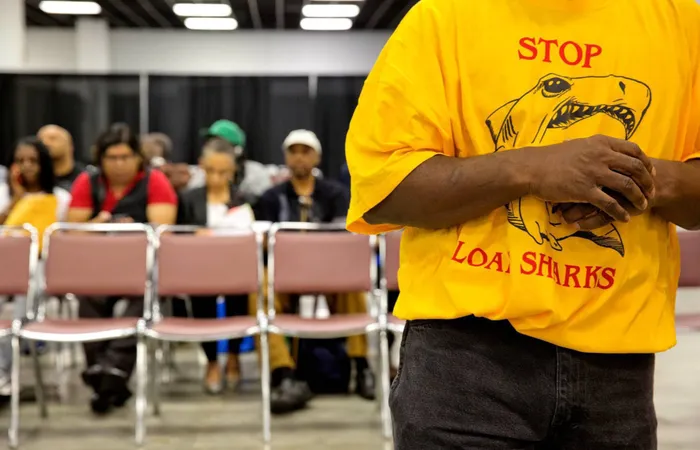
THE message ‘Stop Loan Sharks’ is written on a T-shirt worn by an associate with the Neighbourhood Association Corporation of America. The writer says loan sharks often operate beyond the reach of regulators and the legal system. David Goldman AP
Loan sharks – or mashonisas as they are also known – are ruthlessly preying on financially struggling South Africans.
It is believed that there are nearly 50 000 of these unregistered credit providers in South Africa.
Mashonisa is a Zulu term rooted in the word Shonisa, which means to impoverish, and with interest rates of from 50% to 120% that is certainly what they are doing to the most vulnerable in our society.
Unfortunately for South Africans, the fiscal stimulus we were promised at the beginning of the first lockdown back in March 2020 has not been forthcoming.
There simply isn’t any money and, sadly, far too many people are still waiting for their UIF and Sassa payments, with little hope in sight.
The Sassa and UIF queues are getting longer, the price of petrol and food is rising and load shedding has returned to haunt us.
2021 has not gotten off to a good start for consumers.
The banks have granted as many payment holidays as they possibly could.
As payment terms return to normal, it is now clear that consumers cannot cope with their skuld.
Debt collectors are also out in full force, causing great anxiety and distress for over-indebted consumers.
With the banks tightening up their lending criteria it has become increasingly difficult to access loans (from a reputable institution) to kickstart the year and buy the essentials our children require as they return to school.
This is forcing more and more people into the unregulated loan shark market, further adding to their financial woes.
How they operate:
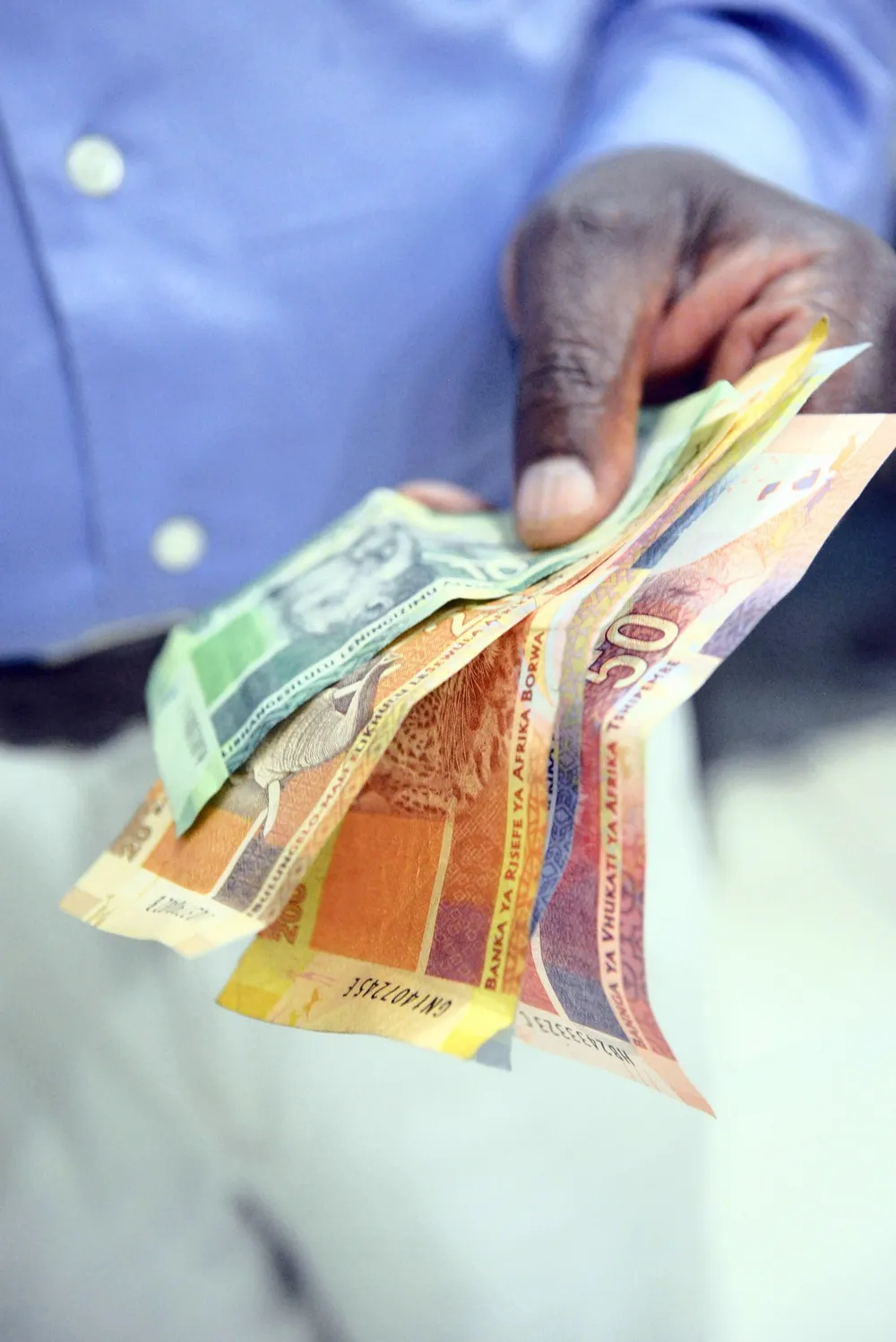
Unregistered lenders typically offer very small loans – from R50 to R5000 – over a short term.
Their interest rates work like this: if they charge you 50% interest on a R1000 loan then you have to pay them back R1500; and at 60% interest, the payback R1600.
That is until you get to the 100% interest (which many charge), and this means that you will owe the mashonisa literally DOUBLE of what you borrowed.
So if you borrow R1000, you will have to pay back R2000.
Pensioners and other Sassa grant beneficiaries are also a vulnerable group who are often targeted by loan sharks who lend them money and then keep their Sassa cards and IDs as surety.
Though this practise is illegal, and some money lenders have been arrested and jailed for it, it sadly still happens.
In addition to the current shambles that Sassa finds itself in, the Minister of Social Development, Lindiwe Zulu, has said that there would be no extension to the payouts of either the temporary disability grant or the Covid-19 relief grant which comes to an end on 31 January.
The reality is that the majority of families rely on social grants to put food on the table, but sadly this is just not enough.
An entire family simply cannot live on just a social grant.
This makes them particularly vulnerable to these cruel financial lenders.
There are dangerous individuals who work and lurk in the unregulated area of informal money lending.
Unlike banks, loan sharks give no payment breaks when things get tough and some of them resort to unsavoury methods of getting their monies back.
This sometimes means going into people’s homes and taking their belongings as collateral until payment is made.
It is a terrible, traumatic space for already struggling consumers to be in.
Yet many people simply have no choice but to resort to this type of borrowing, as they have no access to any other registered loans at lower interest rates.
Even those who are lucky to be employed, fall prey to these money-lenders, as their salary isn’t enough to sustain their families from one month to the next.
Taking out these payday loans might be a quick-fix solution, but it can see you enter a cycle of debt that is very, very hard to break free from.
Anne-Carien du Plooy from the NCR warns consumers to be vigilant when taking out loans.
“It is the time of the year when some consumers will feel like Januworry is three months long because of their financial situation.
“Consumers who might need to borrow money or take out credit should read and understand their credit agreement before signing,” Du Plooy says.
But unfortunately this does not help the person whose only way to put food on the table is to get a loan from a loan shark.
What I don’t understand is, if credible research (and common sense) tells us that there are tens of thousands of unregistered money lenders preying on vulnerable South Africans, then why is nothing being done to stop them and their way of doing business?
Would the logical thing not be to somehow try to regulate them?
Do South African consumers not deserve some sort of protection from these unscrupulous loan sharks?
As it stands, they can charge what they want, and do as they please and are actually getting away with financial murder!
*Moeshfieka Botha is Head of Research and Consumer Education at National Debt Advisors. For more debt and personal finance information visit www.nationaldebtadvisors.co.za