Preparing for retrenchment: Know your rights about company downsizing processes
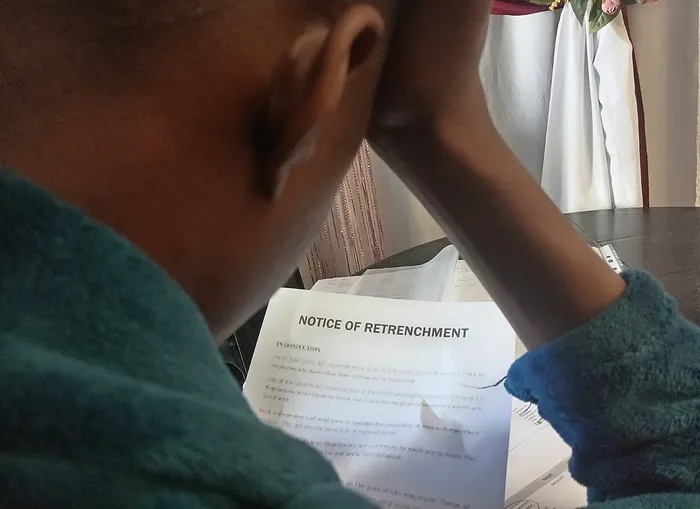
DEAD-END JOB: Retrenchment process must follow labour law
Our weak economy, coupled with load shedding, the rising costs of running a business and global instability, are all factors which affect the ability of companies to keep their doors open.
More and more businesses are being forced to downsize or close down operations, and sadly, retrenchments are becoming more common.
Here are some frequently asked questions and answers around retrenchment:
What is retrenchment?
It is a form of dismissal from your job. You are not being fired and it isn’t your fault. It usually means a company has reviewed their business needs and operational requirements and has decided that for the business to survive, it needs to reduce the number of employees to increase profits or limit further losses.
However, no company can simply inform an employee that they are being retrenched and give them a month’s notice.
The employer must, amongst others, give fair reasons for the retrenchment and follow the legal procedure to ensure labour laws are not broken and rights are not infringed upon.
What is meant by a company’s “operational requirements”?
This refers to what the business needs to keep its doors open or significantly reduce losses. The specific requirements can be influenced by the economy (has there been a drop in sales or is the company facing imminent closure?); technological (can employees be replaced by an automated process or technological developments); or structural (is the company getting a “makeover” and restructuring its processes?).
What is a fair retrenchment process and what are your legal rights in South Africa?
South African law, specifically section 189 of the Labour Relations Act, states that employers cannot retrench employees without following due process. Failure to do so could land the employer in legal hot water.
Process steps:
1. Get invited to and attend a consultation
This first step is implemented so that all involved (the employer, employees and unions) have open and honest discussions about the reasons for possible retrenchment and who will be affected.
Employees must receive a notice about the consultation as soon as the employer considers going through with retrenchments.
The law requires the following to be looked into at the consultation:
Is there a possibility of avoiding dismissals? Eg: would demotions be possible.
If not, what can be done to minimise the financial and emotional impact of the dismissal?
Can the timing of the dismissals be changed?
How are the employees facing retrenchment selected?
What will the retrenched employees take away financially?
You must be notified in writing about retrenchment
In the regrettable event that retrenchment is unavoidable, the company must send the employee a notification of retrenchment.
The employer must state, in writing, the reasons for the retrenchment; why the alternatives that were discussed in the consultation aren’t feasible; how many employees will be affected; and how they were selected.
This notification must also lay out the severance package; what additional assistance the employer can offer; and an indication of whether or not the employee could be re-hired in future. Once this notification has been sent, the employer must give those affected the opportunity to respond.
3. Receive a notice of termination
The employer must inform the employee that the working relationship will come to an end, and will also stipulate the employee’s last day of employment at the company.
Being informed about the amount potentially owed to you as a result of being retrenched is vital, as it can provide some kind of financial buffer and much-needed peace of mind while you look for other work.
Breakdown of retrenchment package Severance pay: Generally speaking, the severance pay amount must be one week’s pay multiplied by each full year of employment at the company.
That said, if a specific amount is mentioned in a policy or contract, then it must be honoured (even if it is more than the standard calculation).

Leave pay-out: If the employee has not taken some or all of their annual leave days for that specific year, they must be paid out for the days not taken.
Notice pay: Because an employee won’t necessarily be working the usual notice period before the working relationship ends, they must be paid out for it. If someone has worked for less than six months, it would be one week’s notice pay.
If the employee has been at the company for more than six months, but less than one year, they are entitled to 2 weeks’ notice pay. For an employment period of more than a year, the notice pay period will be four weeks.
Legal consequences for unfair retrenchments
It’s vital to remember that your rights as an employee are protected by the law. So, if you feel as though you have been subjected to an unfair retrenchment, you likely have a case for unfair dismissal.
If this is the case, you can approach the CCMA or a bargaining council within 30 days of retrenchment.
If conciliation fails at this forum, the employee can refer the dispute to the Labour Court.
Should the legal retrenchment process not have been followed, the Labour Court could instruct the employer to reinstate the employee or award the employee 12 months’ remuneration as compensation.
Where the retrenchment was based on any form of discrimination (for example, because of someone’s race, religion, gender, sexual orientation etc.), the compensation amount could be as much as 24 months’ remuneration.
There have also been cases for employers trying to justify retrenchments with the fact the business is being bought by a larger corporation. However, even in this case, the process is still applicable and a legal requirement.
One option for some financial relief is applying for the Unemployment Insurance Fund, which you can do immediately after being retrenched. This is something your previous employer can assist you with.
The above was adapted from the Law For All website. For more information, please go to: Lawforall.co.za/work/retrenchment-process-and-your-legal-rights-south-africa/.