KIDS COME FIRST
Papgeld advice
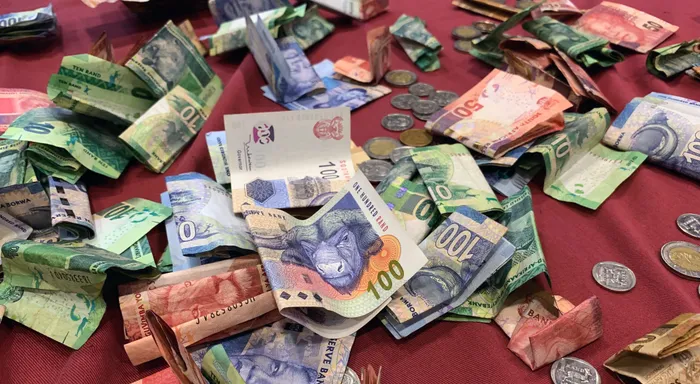
PAY UP: Papgeld problems are real
Image: Ian Landsberg
One doesn’t have to look far on social media to come across a post of a parent (usually a highly-frustrated mother) having a go at the father of her children for not paying papgeld.
In a perfect world, this wouldn’t be happening, as every parent, mother and father, would honour their duty when it comes to the wellbeing and legal maintenance of their children.
But we don’t live in a perfect world. We live in a world where innocent children are exposed to, and made a part of, the anger, hate and public disagreements of their parents, often resulting in the non-payment of child maintenance.
According to the Western Cape Government website, parents have a legal duty to provide financial support for their children.
As the primary caregiver of a child, you have the right to apply to a maintenance court for an official demand that the other parent contributes monthly to support the child.
Support can include necessities such as food, clothing, housing, and paying for school fees.
If the child is not living with the mother or the father, the child’s caregiver can also apply for maintenance costs from the parents.
For example, the grandparents can apply for maintenance from the child’s father and mother if the child is living with grandparents.
If a parent receives a court order instructing them to pay child support, it’s a criminal offence not to pay.
Important steps to follow:
You must first apply for a maintenance order at the Magistrates Court (also known as
District Courts) in the district where you live.
If you’re unsure, your local court will give you advice and tell you at which court to apply for maintenance.
Go to the relevant court, complete and submit Form A: Application for a maintenance order (J101).
You’ll also need to bring the following:
- Your ID or a certified copy, or passport or driver’s licence or an immigration permit.
- Certified copies of the child/children’s birth certificates.
- Proof of your monthly income and expenses, such as receipts for food purchases, electricity and rent payments.
- Bank statements for the last three months.
- Payslips for the last three months. Full name and proof of the physical and work address of
the person responsible for paying the maintenance money.
- A list of your expenditures.
- If you were married and are now divorced, a copy of the divorce order.
- The court will set a date on which you and the respondent (the person who you wish to pay maintenance) must go to the court.

EDUCATION IS IMPORTANT: Make sure your child has the best
Image: Supplied
A maintenance officer and an investigator will then investigate your claim and look into your circumstances.
The court will serve a summons (a letter instructing a person to come to court) on the respondent (the person against whom the claim is brought) to appear in court on a specific date to discuss the matter.
The respondent then has a choice between agreeing to pay the maintenance as claimed, or contesting the matter in court.
If, the respondent agrees to pay the maintenance as claimed, a magistrate will review the relevant documentation.
The magistrate will then make an order and may decide to do so without requiring the parties to appear in court.
If the person allegedly liable to pay maintenance does not consent to the issuance of an order, they must appear in court, where both parties and their witnesses will give evidence.
If the court finds the person liable for paying maintenance, it will order the person to pay the amount of support required.
The court will also determine when and how maintenance payments must be made.
The court can order the payment of maintenance money in one of the following ways:
- At the local magistrate’s office or any other government office designated for this purpose.
- Into the bank or building society account designated by the person concerned.
- Directly to the person who is entitled to the money, or
- Using an order that directs the employer of the person who is liable for paying maintenance to deduct the maintenance payment directly from the employee’s salary, in keeping with the 1998 Maintenance Act.
Your view of the other parent’s behaviour does not affect your children’s right to maintenance.
You must still pay maintenance, even if the other parent has remarried, is involved in another relationship, doesn’t allow you to see the children, and if either party later has more children.
You are also allowed to request that the amount paid for maintenance be increased or decreased, either because it has become insufficient or because you can no longer afford to pay that amount of maintenance.
If the respondent fails to pay within the specified times, you should report the matter to the Maintenance Offices.
The court will follow one of the following two options:
Civil Enforcement of Maintenance, through the magistrate, may order one of the following:
- Emolument attachment, attachment of debt and execution of movable/immovable property.
- Criminal Prosecution. A warrant of arrest can be issued as the respondent failed to comply with an order of a court.
Applying for a maintenance order is free. Whilst all of the above are how it should work, there are many instances where the system doesn’t work – and in the end, the children suffer.
I hope that the system becomes more effective and that the courts, parents and all involved just put the needs of the child first.
Do the right thing. Pay your child maintenance due.